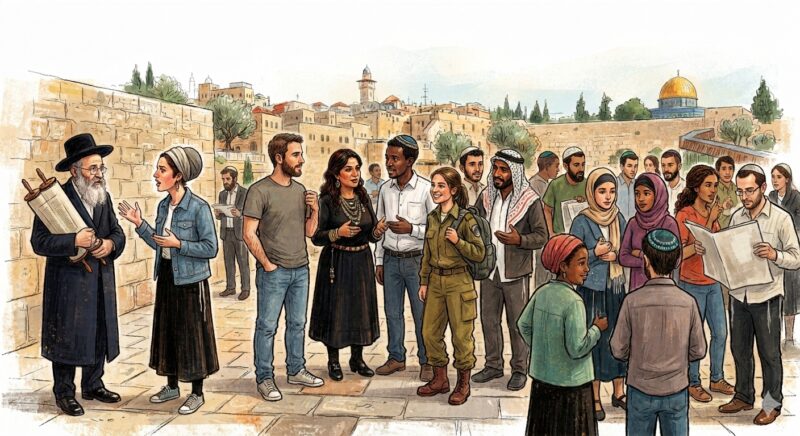
It is difficult for those outside of Israel to begin to grasp the great differences in the groupings within Israel. Here is a list.
1. The secular Israelis are the majority, but they are returning to belief in God and some connection to Jewish traditions, unlike their parents.
2. The moderate modern nationalist Orthodox. These are pro-Israel Jews who fight in the wars, accept dialogue with Christians and would be very similar in heart to the Judaism of Yeshiva University in New York. Some are involved in settling Judea and Samaria. See Rabbi Shlomo Riskin as an example.
3. The radical right-wing nationalist Orthodox are in line with the late Meir Kahane. They want to expel the Palestinians from Judea and Samaria and probably even to expel Israeli Arab citizens. A few rabbis inspire this extremism and violence among young adults who have attacked Palestinian-owned homes, flocks, cars and Palestinians themselves. Itamar Ben-G’vir recently spoke against them but as a follower of Kahane he probably really agrees with them. That he is in the government of Netanyahu is a real problem. They misapply the Torah Moturi and want to take all the land promised and exclude all who are not halakhic Jews from Israel. Due to Bibi accommodating Ben-G’vir, little has been done to bring this submission to the laws of Israel.
4. The moderate Ultra-Orthodox embrace the State of Israel and are willing to serve in the army. They are a small percentage.
5. The large number of the Ultra-Orthodox are very against serving in the army, training for the working world and more. They protest, shut down roads and do all kinds of actions to protest being drafted. They promote a state within the state of those who need welfare and only want to study and argue over Rabbinic literature all day. It is a huge problem of welfare expenditures and lack of contribution to the society.
6. The anti-Israel Ultra-Orthodox. One example is the Neturei Karta and other such groups that are against the state of Israel. They believe that Jewish people should not form a Jewish self-governing state until the Messiah comes. They align with anti-Israel Palestinians.
7. The Messianic Jews. They are pro-Israel, but vary on how much of the Land we should control right now. They are not aligned with one political party.
Well, is it any wonder that politics in Israel is unlike any other place?
What is our response? Our people need Yeshua and we pray for an outpouring of the Spirit to see many more come to faith. We also prayerfully engage with the political process in the Land.