The doctrine of the last days, or eschatology, is an important study in biblical theology. There is now an overwhelming consensus in biblical scholarship that the last days began in the first century with the coming of Yeshua—His ministry, death, resurrection, and the outpouring of the Holy Spirit on the Feast of Shavuot (Pentecost). The Kingdom of God has come, but in an “already and not yet” way. We are invited to live in and from the Kingdom under the rule of Yeshua, to live in Kingdom community.
There is, however, much in regard to the Kingdom that is not yet. Until the Age to Come, after the return of Yeshua, this “not yet” will continue. There will be a final intervention at His return that brings His Kingdom rule in fullness. We are the players on the stage of last days/eschatological history who, by fulfilling the will of God and extending the Kingdom of God, move history toward the climax of His coming again. I am happy to say that there is broad consensus on this understanding.
The Last of the Last Days
However, there is still the matter of the last of the last days and the description of battles or wars that are part of the events at the end of this age leading to His coming. One of the key events is the turning of the Jewish nation to Yeshua. This last-days event is described in the Roman Catholic Catechism, paragraph 674, as key to His return. He will not return until His ancient people recognize Him. Yes, even the Roman Catholic Catechism notes that the end of this period is connected to the Jewish people.
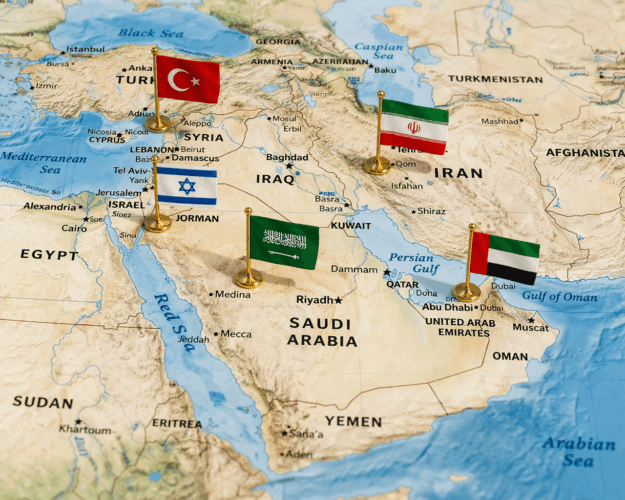
I do want to address the detailed scenarios that some put forth about the last of the last days, especially those connected to events in the Middle East and the nation of Israel. In this time of war with Iran, many seek to find these events predicted in the Bible. When I was a teenager, concentration on end-times scenarios was a major emphasis. For those who did not live through that time, it is hard to imagine. There were regional prophetic conferences. Detailed scenarios were presented about the lineup of nations against Israel—a restored Roman Empire of nations, the importance of Russia as a key invader from the north, and China from the east.
I was intrigued and made special efforts to attend—sometimes at the summer camp where I was a counselor and sometimes in New York City. During my college and graduate school years, after reading many interpretations, I came to the conclusion that we are not meant to know the detailed sequence of events, but only a broad outline.
Ezekiel 38 and 39 provide one example. Do these events, describing an invasion of Israel from the north—Gog and Magog—occur before the time of the Antichrist and then lead to a lull? Note that it takes Israel seven years to burn the weapons of the defeated invaders (39:9–10). There is no description in these texts of the coming of the Messiah in glory (Zech. 14).
Three primary interpretations are common. The first is that this is simultaneous with the battle for Jerusalem and the defeat of the forces of the Antichrist—simply describing a parallel battle in the mountains of Israel. The burning of the weapons then takes place during the beginning of the Millennial Age. The second, as described above, is that this battle takes place some years before the battle for Jerusalem in Zechariah 12 and 14. The tribulation and the Antichrist come later as a separate matter. The third is that it is symbolic of the final war before the Age to Come, and we are not to pin down specifics at all.
Dr. J. Barton Payne was a brilliant professor of Old Testament at Wheaton College Graduate School. I highly recommend his volume, An Encyclopedia of Biblical Prophecy. Payne interprets every predictive prophecy in the Bible and presents a case for the time of fulfillment for each one. He lists 15 periods of fulfillment. The Ezekiel passage is placed at the end of the Millennium as the final rebellion—the same as the rebellion after the 1,000 years in Revelation 20.
Well, I have to say that after reading these various views, I am not convinced that I know. I lean toward the second interpretation.
Who are the nations that Ezekiel describes? Traditional prophecy conferences from the 1960s identified this as a Russia-led alliance. But convincing arguments have been put forth by Walid Shoebat and Joel Richardson that Turkey is the nation involved, and that the descriptions and language better fit tribes in northern Turkey. I think there is credibility to their arguments. Classical Dispensationalism argued that the Antichrist would arise from a revived Roman Empire, not this coalition. Richardson, however, argues that the Antichrist is Islamic.
The Broad Outline
I have come to the conclusion that it is not important to know the detailed sequence of the last events before the return of Yeshua, and that we should not spend much time trying to figure it out. However, I do believe in a broad outline that guides my response to events today.
First, the Body of the Messiah will be completing its task of preaching the Gospel of the Kingdom in all the nations as a witness (Matthew 24:14). Secondly, many Christians will partner with Messianic Jews to make Israel jealous (Romans 11:14). This witness will be accompanied by revivals and outpourings of the Spirit (Joel 2:28–30). Israel will be prepared to corporately call on Yeshua (Matthew 23:39).
Thirdly, there will be invasions and wars (Ezekiel 38–39) leading to a final invasion where the forces of the Antichrist reach Jerusalem. Multitudes from the nations will be involved (Joel 3). The Jewish people will be anointed to fight (Zechariah 12), but the defeat of their enemies leads to tearful repentance and looking upon Yeshua whom they pierced. A parallel passage in Zechariah 14 describes the final invasion and the coming of Yeshua, who stands on the Mount of Olives and defeats all the invaders (Zechariah 14; Revelation 19).
I do not think we need to concern ourselves with more than this broad outline.
In this light, how should we view the war with Iran and its proxies? It is one of those last-days wars and does foreshadow more to come. But I believe there will also be a time of peace. I would simply say: keep your eye on Turkey. I thought this even before they became more radically aligned in the Muslim world and moved away from their earlier alliance with Israel.