https://restorationfromzion.com Theology of Hymns

The Theology of Hymns

The Bible’s Detractors
Detractors claim that the Bible presents us with a cruel God, even a sadistic God, and that biblical faith is evil. This is because they read texts about the command of Israel to wipe out different ethnic groups that inhabited ancient Canaan, and passages about the hard judgment that awaits evil people either after death or at the final judgment. I wrote about this issue recently on this website. This reaction is focused on less than 10% of the hard texts in the Bible. There are good explanations for these texts. See Walter Kaiser’s book on The Hard Sayings of the Bible. There are many writers who address these issues. Yes, a fearful judgment awaits those who reject God and the truth.

The Canonical Thrust of the Bible
Some years ago, Dr. Brevard Childs of Yale Divinity School argued that our theological convictions should be based on the overall thrust of the Bible on particular subjects. He called this the canonical thrust of the Bible and argued that we should submit ourselves to the teaching that arises from this canonical thrust. However, without belief in the full authority of all biblical texts, there is too much subjectivity in the selection and judgment of what that thrust really is. This does not lead to being true to the canonical thrust.

Theology through the Hymns
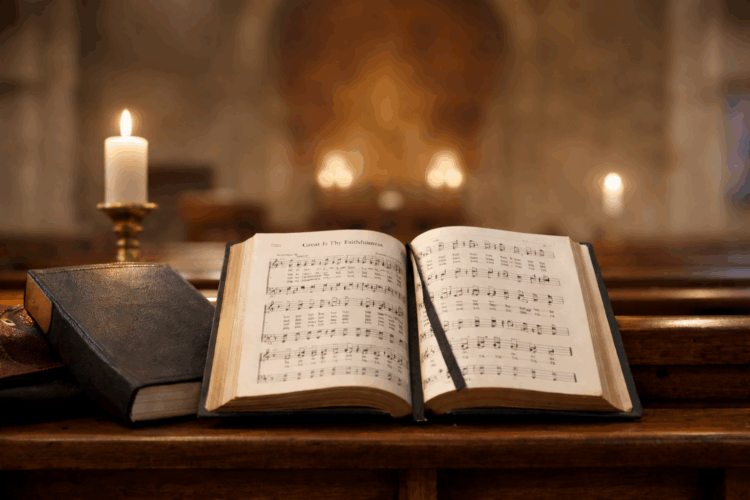
I want to propose that we look at the issue of the canonical thrust of the Bible through the hymnology of the people of God. There is a great compendium of hymns from the Middle Ages to today. It is painful to me that the place of the great hymns in many congregations has been lost. One writer wrote, for example, that Methodists learned their theology from their hymns. I would venture that this was true for many others, not only Methodists. The hymns give us a good sense of the canonical thrust of the Bible. Some topics are left out, but so much is included.

What Do the Hymns Present in Theology?
They present God as a God of love who gave His Son as a sacrifice. We read from Wesley, Amazing Love, How Can It Be. They present the suffering of Yeshua for us in a deep and touching way, as in the Bernard of Clairvaux and Bach hymn, O Sacred Head, Now Wounded. God is presented as a God of miraculous intervention and as One with whom we can have an intimate, conversational relationship. In I Come to the Garden, we sing, “He walks with me, and He talks with me and tells me I am His own.” He is our provider in God Will Take Care of You: “Be not dismayed whatever be, God will take care of you.” He is faithful in Great Is Thy Faithfulness. He is our mighty fortress in A Mighty Fortress Is Our God. He is majestic in How Great Thou Art. Yes, God is the true and righteous Judge, but the greater emphasis is on the offer of salvation, not condemnation—though that danger is certainly present, as in Sleeper’s Ye Must Be Born Again. He is coming again, “with power and great glory.”

I would urge the reader to purchase a great book of hymns, such as Hymns for the Living Church. Read through it devotionally and see the theology of the Bible expressed in hymns.

The Canonical Thrust of the Jewish Worship Book
I would also recommend purchasing a Jewish worship book, the Siddur. In this devotional book, we see how our people put the theology of the Hebrew Bible into worship. It is the canonical thrust as perceived by classic Jewish devotional writers.

How did our most spiritually in-tune people read the Bible? This is such an interesting study. Be encouraged.

Judaism, Christianity and the Decline of Western Civilization

I recently read a profound book by Melanie Phillips. I am familiar with her mostly from op-eds she has written for the Jerusalem Post. She is a Modern Orthodox Jew and a moderate conservative, a British Israeli. I usually find her writings convincing and insightful. Her thesis in this book is profound, and I agree with about 90 percent of it. It is very much in line with my own views.

Western Civilization Is Based on the Bible

The best of Western Civilization is based on the Bible, especially the Hebrew Bible. The failures of Western Civilization are due to a failure to live up to biblical law and values, while progress comes when people recognize the disparity and seek to more fully implement biblical norms. This was the case in the fight against slavery. I think of William Wilberforce in England, a deeply committed Anglican Evangelical, and Harriet Beecher Stowe, who wrote Uncle Tom’s Cabin and also composed hymns.

For Phillips, Judaism provided the world with these laws and values, and Christianity was key in mediating them to the Western world. Civil society should acknowledge God and His law as the source of our law and values. This provides the best foundation for rights and responsibilities, separation of powers, the worth of every human being, and much more. I would add the American Declaration of Independence, which affirms that every human being is created equal and that basic rights are endowed by the Creator.

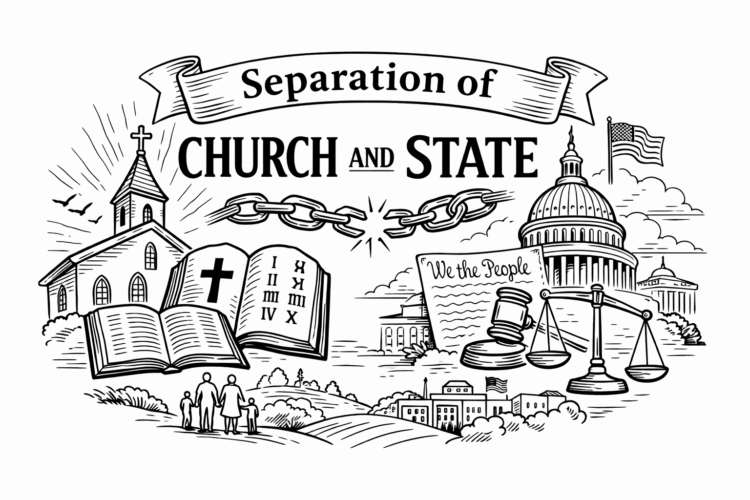
A Wrong Understanding of the Separation of Church and State

For Phillips and for me, the prevailing understanding of the separation of Church and State is a profound mistake. The West should acknowledge and honor the source of its laws and values: fair courts, checks on power, and rulers who are under the law rather than above it. Morality, the family, and biblical sexual ethics are all crucial to a future, prospering society.

She calls for a partnership between conservative Jews and Christianity to restore biblical norms as the foundation of society and for this foundation to be publicly acknowledged. Minorities who do not believe in God or the Bible can still embrace these values, and minority rights must be protected so that religious faith is not forced on anyone.

There are many historians who have acknowledged this positively. One of the more famous is Herbert Butterfield of the University of Cambridge, who recognized this foundation as key to the origin of science and the progress of Western civilization. More recently, atheist British historian Tom Holland has acknowledged that only societies influenced by the Bible practice human rights. Phillips is therefore in good company.

Neo-Marxism Marches Through Western Institutions

What happened? There has been a march through Western institutions of neo-Marxist ideas and grievance culture. This is expressed in “human rights” gone off the rails, such as DEI, which seeks quotas and equal outcomes among races and ethnic groups; the loss of the definition of sexual identity as male and female; sexual fluidity and the trans movement; the breakdown of marriage and family; and anti-white, anti-colonial ideology.

All whites are deemed guilty of the sins of centuries past. This teaches Westerners to despise their heritage. Without courage rooted in the good of that heritage, the West is adrift, with nothing left to preserve. The absurdity of blaming all whites—including those with no ancestors who practiced slavery or came from nations that never engaged in colonialism—is ignorant and foolish, yet the idea prevails.

For neo-Marxism, one is either an oppressor or the oppressed. Women, blacks, other minorities, homosexuals, transsexuals, and even those with bipolar disorder are to be affirmed exactly as they are. They are categorized as the oppressed. Meritocracy is rejected, and this will lead nations into economic and social decline. Preserving national identity is worthless to them. They embrace transnationalism, universalism, and relativism. No culture is better than any other—really? Even head-hunting cannibal cultures? Or cultures that enslave women?

This leads to the open-borders orientation of the West, where massive immigration erodes the culture of the host country. Immigration is no longer governed by the expectation that newcomers integrate and support the culture of the nation, as was the norm in the past. This is especially evident with Muslim immigration. Some of these immigrants seek to destroy the West and replace it with radical Islam and Sharia law. Muslim fascists are not relativists but absolutists. They exploit Western relativism and weakness, using Western elites as useful idiots.

The October 7th Genocide

The response of many in the West to the October 7th genocidal attack against Israel two years ago illustrates the bankruptcy of moral thinking in the West and underscores the urgent need for restoration. Israel, as a nation, is key to that restoration. Phillips’ presentation of Israel’s importance is profound: Israel represents a life-affirming society, not a culture of death.

The Call for Jewish and Christian Cooperation to Save Western Civilization

Phillips therefore calls for a great movement of Jews and Christians to fight back and restore Western Civilization. She calls for Christianity to be pro-Jewish and pro-Judaism and to repudiate its historic anti-Semitism.

Weaknesses in Her Book

So far, so good—amen. But there are weaknesses. Phillips criticizes Christianity for being too heavenly minded, echoing the old phrase about being “so heavenly minded that one is no earthly good.” She defends a more Jewish, this-worldly focus and downplays the importance of eternal life. She has a point with respect to some Christians, but she is partly wrong.

If we lose the hope of eternal life, we will lose the courage needed to affect this age and this world. C. S. Lewis argued that the most effective people have one foot in heaven and one on earth. Phillips even suggests that belief in eternal life is not essential for social transformation and that Judaism functions without this focus. I would argue that Judaism does emphasize one’s state in the Age to Come.

The great philosopher Immanuel Kant saw this more clearly than Phillips. While Kant could not embrace the importance of the sacrificial death of Yeshua, he grasped key truths. In his Critique of Practical Reason, he argued that three beliefs are necessary to sustain a humane and ordered society: God, freedom, and immortality (life after death). In this life, people do not receive just reward for their good or evil deeds—so why be moral? True moral motivation requires belief in life after death, where justice will ultimately be rendered. Second, freedom is necessary for real moral responsibility. Third, belief in God as the moral judge who rewards good and punishes evil is essential. These beliefs are foundational for civilization as opposed to barbarism. I agree with Kant.

Another missing piece in Phillips’ work is revival and evangelism. The only way to turn the tide against the neo-Marxist onslaught is for a sufficiently large portion of the population to push back—and push back hard. Without revival and successful Christian evangelism, this will not happen. This is why preaching the Gospel of the Kingdom with power and genuine outpourings of the Spirit is essential. In American history, such revivals have repeatedly led to profound and positive social change.

The Ten Percent

Very recently, Bill Mahrer and the conservative Orthodox Jewish pundit Ben Shapiro had a dialogue.  Shapiro was arguing for faith in the God of the Bible and the Torah, and Mahrer was arguing for atheism, claiming that much in the Bible was backward and immoral.  Shapiro argued like atheist historian Tom Holland in the U. K. that Mahers basis for judgment was from the Bible itself and the Judeo-Christian influence on the worth of persons and human rights.  Yet, without God, these values would not last but would be a cut flower.

The Small Percent of Troubling Passages

I have noticed that debunking the Bible as if it were inhumane is based on a small percentage of the content of the Bible.  In my view, it is troubling that less than 10% of the Bible. Such passages, such as annihilating the Canaanites, men, women, and children, and sometimes even the animals, seem to be genocide.  Then there are the prayers called imprecatory psalms that call down harsh judgment on enemies.  The psalmist says that the people will be happy who smash the Babylonian babies to death. How about God killing 70,000 Israelites because David numbered the people?   There are some great books that explain such passages, and I won’t go into those explanations here.  Do note one great book on this.  Walter Kaiser, Peter H. Davids, F. F. Bruce and Manfred T. Brauch, Hard Sayings of the Bible.

The Bible’s 90% Message

However, what of the 90%?  The Bible’s message is very clear.  God is a God of compassionate love and justice.  (Exodus 34). This is the argument of the famous Israeli Rabbi Shlomo Riskin (Judaism, A Love Story). He calls upon all people to repent and pledge their allegiance to Him.  If they do so, He will empower them to obedience.  Those who make that decision are assured fruitfulness and purpose in this life and a good destiny in the Age to Come.  Those who refuse God and his ways will be lost.  Of course, the message of the New Covenant Scriptures is that this decision is made possible by the Holy Spirit and that the power to obey comes through Yeshua.  It is by being filled with the Spirit that we can obey.

In this context, we read all of the amazing texts on God’s call for justice in the courts, honesty in business, and care for the widow, the orphan, and the poor.  The Torah is summarized in the ten commandments, or better named, The Covenant of the Ten Words.  We are to love God with our all and our neighbor as ourselves (Deut. 6:4 and Lev. 19:18).

Yes, we can provide rationales for the 10% but really, the 90% is where we need to stand in our defense of the Bible.

The Pharisees and the Post-Destruction Yavne New Beginning

How does intuitive insight provide new possibilities in philosophy, theology, science, and literature?  Catholic Theologian Thomas Dubay and the noted scientist Michael Polanyi point to the mystery that understanding comes almost like revelation.  Augustine taught that all progress in knowledge is by illumination of the Spirit.  Well, I am back in Israel and had an amazing experience with my jet lag in the early morning, dozing.  It was an insight about the rejection of the Messiahship of Yeshua in the Yavne community of Pharisees that launched Rabbinic Judaism, Judaism without the Temple.  It is an approach I have not encountered, but maybe someone else has promoted these ideas. I would not be surprised.

Rabbai Ben Zakkai’s Quest for Peace

About a week ago, I finished a book by the famous now-retired Rabbi, Shlomo Riskin, former chief rabbi of Efrat in Israel.  I wrote a review of it.  Riskin described the difference between Rabbi Yohannan Ben Zakkai, who founded the Yeshiva in Yavne when Jerusalem was being destroyed.  He comforted his disciples by stating that prayer, study, and good deeds could substitute for the Temple until its restoration. Ben Zakkai was from the school of  Hillel, not the school of Shammai.  The school of Shammai dominated the Pharisees in the period before the destruction of the Temple.  They supported the revolt against Rome.  Messianic claims were part of the revolt.  After the revolt, the more merciful school of Hillel, then led by Ben Zakkai, became dominant.  Zakkai was now strongly motivated for peace with Rome and against war.   I believe this made him reject messianic claims.  A messianic claim meant revolt against Rome.  

Rabbi Akiva’s Embrace of War

Riskin then describes Rabbi Akiva.  Akiva supported the second great revolt against Rome led by Bar Kochba.  He even proclaimed him as the Messiah.  Akiva was executed with torture, and the revolt was quashed.  However, they put up a great fight.  Riskin then looks at modern Israel and its founding, requiring a war of liberation and wars for preservation. Despite the terrible loss in the second revolt, Riskin ends up being more sympathetic to Akiva.  Akiva is an example of joining the promise of redemption with the human component of fighting for redemption.  This is an interesting perspective and quite new to me.  For Riskin, this is the hukan and divine working together.

Passages Emphasized in My Dream

This background is a context for my dream and interpretation.  It connects to the Biblical evidence that the Pharisees were not in agreement in opposition to Yeshua. Yes, the more rigid Shammai school of Pharisees opposed Yeshua, but how did the Hillel early Rabbis in Yavne come to oppose Him.  The passages of Acts came to mind in my dream. 

  1. Note that the Hillel Rabbi Gamliel who was the teacher of the Shaliach Shaul (the Apostle Paul) speaks in opposition to the persecution of the new  messianic movement in Yeshua.  He was the leader of the  Hillel school Pharisee. “A certain Pharisee named Gamaliel, a teacher of the Torah respected by all the people, stood up in the Sanhedrin and gave orders to put the men outside for a little while. Then he said to them.  Men of Israel, be careful what you are about to do with these men.  For some time ago Theudas rose up, claiming to be somebody; and a number of men, maybe four hundred, joined up with him.  He was killed, and all who followed him were scattered and came to nothing.  After this fellow, Judah the Galilean rose up in the days of the census and got people to follow him.  He also perished, and all who followed him were scattered.  So, leave them alone. For if this plan is of God, you will not be able to stop them.  You might even be found fighting against God.”

We should note in this context that the Sadducees drove the early persecution and were filled with jealousy.  (Acts 5:17)  

In Acts 15, a party of Jewish Yeshua followers say that unless the Gentile believers are circumcised, they cannot be saved. This was the position of the Shammaite  Pharisees, not the position of the Hillel school.  Apparently the Shammaites influenced these Messianic Jews, but the Hillel school did not agree. In the Hillel school, Gentiles would have a good destiny in the Age to Come if they rejected idolatry, turned to God and kept the universal laws of God summarized in the seven Noachide Commands. (On this see Markus Bockmuehl, Jewish Law in Gentile Churches)

  1. When Paul was under arrest in Jerusalem, he spoke to the Sanhedrin, dominated by Sadducees.  “But recognizing the one group was Sadducees dn the other Pharisees, Paul began crying out in the Sanhedrin, ‘Brothers, I am a Pharisee, a son of Pharisees!  I am on trial because of the hope of the resurrection of the dead.’  When he said this, a dispute broke out between the Pharisees and Sadducees. For the Sadducees say there is no resurrection or angel, or spirit, but the Pharisees affirm them all.  Then there was an uproar.  Some of the Torah scholars of the Pharisees’ party stood up and protested sharply, ‘We find nothing wrong with this man! What if a spirit or angel has spoken to him?”  (Acts 26:6-9) 

It hardly seems from these texts that the issue of Yeshua as the Messiah was settled among the Pharisees and the Hillel school would probably be more open.  However, with regard to legal authority, keeping Paul bound and then appealing to the Romans, the Sadducees had government power.

In Acts 26”5, Paul states before King Agrippa, Paul says, “I lived as a Pharisee.”  He never repudiated this part of his identity as we read in Acts 26:6)  

These texts prompted W. D. Davis in his classic, Paul and Rabbinic Judaism, to state in his appendix, that Paul remained an Orthodox practicing Jew until his death (according to the traditions of the Pharisees). 

The Fear of War with Rome and Destruction

One other background text is important.  The Sadducees were fearful that a rebellion against Rome, which was associated with any claim to be the Messiah, would lead to the destruction of Jerusalem and their loss of power.  He presents a double entendre of meaning when the High Priest Caiaphas says, “You don’t take into account that it is better for you that one man die for the people rather than for the whole nation to be destroyed.”   For the high priest, any messianic claimant, especially one showing supernatural powers (Lazara had just been raised from the dead) would raise up a rebellion against Rome which Israel would lose. That Yeshua had no intention to do this and taught against it, did not make a dent on these leaders.  Of course, the irony is that Yeshua did die for the people.  

Forty years later, Jerusalem was destroyed.  The power of the Sadducees in leading the Sanhedrin is over.  The power of the more rigid school of Shammai has been diminished and the School of Hillel dominates. The Messianic Jews had escaped from Jerusalem and followed the prophetic warning of Yeshua to flee. The destruction of Jerusalem, the Temple and the terrible slaughter was incomprehensible.  I imagine, with some justification, that the last thing Rabbi Zakkai wanted to hear was any claim for anyone to be the Messiah.  Could this have meant to him that a new army would be raised under someone who claimed to be the Messiah who would again oppose Rome.  As Riskin described it, Zakkai was the proponent of God bringing the redemption of Israel with no human military part in it. Was the rejection of Yeshua really part of lumping all messianic claims together and rejecting all messianic Claims.  The days of the apostles and their signs and wonders ministry was over.  Other than John, we do not read of other apostles in Israel during this period. 

Drawing Boundaries: Judaism and Christianity

Now that this trajectory was set, the succeeding generations of Rabbis had to defend this rejection and define themselves against the new Christian movement.  In his great book Borderlines, Daniel Boyarin, a well-known Jewish scholar says that there was nothing in Messianic Jewish/early Christian doctrine that was contrary to what was within the acceptable boundaries of first century Judaism.  (See also his book The Jewish Gospels)  However, from that time the movement of Christianity and Judaism defined themselves against the other.  Ideas that were acceptable in 1st Century Judaism were no longer acceptable.  Judaism sought to cleanse out of itself such ideas such as a divine Messiah.  This idea is common in scholars of  what is called, “The parting of the ways.”

If this thesis is true, the rejection at Yavne was not so much a rejection with a clear perception of who Yeshua claimed to be according to his disciples, but a response to trauma and wanting to avoid any messianism.  Some Ultra-Orthodox Jews reject the state of Israel as a hindrance to God bringing supernatural redemption and restoration in the real coming of the Messiah. 

I wonder if this understanding could contribute to Jewish/Christian dialogue and with Messianic Jews as part of a reconsideration of who Yeshua is. 


Mercy Triumphs over Judgment

But I tell you that everyone will have to give account on the day of judgment for every empty word they have spoken. For by your words you will be acquitted, and by your words you will be condemned.” Matt 12:36-37

This Scripture alone should shake us up.  How many idle words have you and I spoken (or written, I would add)?  We serve a holy and awesome God, and no one in the flesh can stand in his full manifestation of glory.  The intense light emanating from his very being would burn us up.  There is no one righteous, no not one.  We all reap the wages of sin, and without Yeshua having received the full penalty of the law of sin and death, we would not be alive.  It is only by God’s great love that we are set free from the law of sin and death and can come boldly before him to obtain mercy and grace in time of need.

Isaiah experienced a vision of God after a major king of Israel, Uzziah, died.  Uzziah had become king when he was sixteen and during the days of Zechariah, who instructed him in the fear of the Lord, and as long as he sought the Lord, God gave him success. (2 Ch 26:3-5)  After he had become powerful, his pride led to his downfall, and he offered unauthorized incense before the Lord.  He became angry when a prophet rebuked him, and immediately leprosy broke out upon Uzziah. It was in the context of this national disillusionment that Isaiah had this vision of the Lord upon his throne.  He saw the seraphim above him calling out to one another, “Holy, holy, holy is the Lord Almighty, the whole earth is filled with his glory,”  and the doorposts shook and the temple was filled with smoke.  Isaiah was undone and cried out,  “Woe to me, I am a man of unclean lips amongst a people of unclean lips.”  He could not bear to stand in the presence of such holiness, for his eyes had seen the Lord Almighty!  Then one of the seraphim took a piece of coal from the altar and touched his lips and declared that his guilt was taken away and his sins were atoned for. (Isa 6:1-7)

We are in a season of testing and refining.  Major leaders have fallen, and many have become disillusioned and cynical.

But who can endure the day of his coming? Who can stand when he appears? For he will be like a refiner’s fire or a launderer’s soap. He will sit as a refiner and purifier of silver; he will purify the Levites and refine them like gold and silver. Then the LORD will have men who will bring offerings in righteousness, Mal 3:2-3

How are we to respond when we see those whom we trusted fall into sin?  How did Abraham respond when the Angel of the Lord came to him and announced the destruction of Sodom and Gomorrah?  He pleaded with the Lord to spare Sodom and Gomorrah even if there were ten righteous people.  He cried out for mercy.  And Moses and Aaron fell on their faces to plead for mercy when God was going to destroy the Israelites and God heard their cry and relented.  In like manor, we are to guard our hearts and speech  while crying out for mercy.  It is only when we are deeply aware of our own sin, like Isaiah, that we can begin to have mercy for others. God does not let the guilty go unpunished but his kindness leads us all to repentance.  David sinned by counting his mighty men but he entrusted his punishment to God instead of men as God was full of mercy.

David said to Gad, “I am in deep distress. Let me fall into the hands of the LORD, for his mercy is very great; but do not let me fall into human hands.” (I Chr 21:13)

And he passed in front of Moses, proclaiming, “The Lord, the Lord, the compassionate and gracious God, slow to anger, abounding in love and faithfulness, maintaining love to thousands, and forgiving wickedness, rebellion and sin. Yet he does not leave the guilty unpunished; he punishes the children and their children for the sin of the parents to the third and fourth generation.” (Ex 34:6-7)

Yes, justice for the afflicted must be pursued but let us take this time of shaking for an opportunity to examine our own lives and to learn intercession like Abraham and Moses.  Lot and his family were spared though Sodom and Gomorrah were destroyed, and God preserved the children of the Israelites to go into the Promised Land. In like manner, there is coming a time when God’s wrath/judgment will be poured out upon the nations who invaded Israel and those who engaged in horrendous acts of antisemitism.  We are then to stand in the gap and cry out for mercy, for all have sinned.  God has bound us all over to disobedience that he might have mercy on us all.

Speak and act as those who are going to be judged by the law that gives freedom, because judgment without mercy will be shown to anyone who has not been merciful. Mercy triumphs over judgment. (James 2:12-13)

But I tell you that anyone who is angry with a brother or sister, will be subject to judgment. Again, anyone who says to a brother or sister, ‘Raca,’ is answerable to the court. And anyone who says, ‘You fool!’ will be in danger of the fire of hell. (Matt 5:22)

You, therefore, have no excuse, you who pass judgment on someone else, for at whatever point you judge another, you are condemning yourself, because you who pass judgment do the same things. (Rom 2:1)

God “will repay each person according to what they have done.” To those who by persistence in doing good seek glory, honor and immortality, he will give eternal life. But for those who are self-seeking and who reject the truth and follow evil, there will be wrath and anger. There will be trouble and distress for every human being who does evil: first for the Jew, then for the Gentile;   but glory, honor and peace for everyone who does good: first for the Jew, then for the Gentile. For God does not show favoritism. (Rom 2:6-11)

We all one day will have to face the judgment seat of God.  Because I recognize my dire need for mercy, his forgiveness for every idle word I have spoken, for every time I was angry with others, or every time I harbored bitterness or entertained unclean thoughts, I therefore cry out.

BLESSED ARE THE MERCIFUL, FOR THEY SHALL OBTAIN MERCY.

The Theology of Charles Finney, The Great Revivalist

Many consider Charles Finney the greatest revivalist in American history.  He held revival meetings mostly before the Civil War.  Outpourings of the Spirit, conversions, and dedications were noteworthy.  Transformations of whole towns and cities in New York state were especially noteworthy.  Finney was also a great abolitionist and opposed slavery with great passion.  He served as President of Oberlin College in Ohio, which joined in the fight.  His life had parallels to Jonathan Blanchard, the founding President of Wheaton College who also fought for liberation. 

Finney on Revival

Many years ago, I read Finney’s Lectures on Revival.  Then I read his autobiography. Both were amazing.  However, I did not read his Systematic Theology.  I thought his theology was like John Wesley and the Methodists, and did not have the motivation to read it.  Over 40 years ago, I mentioned it to Asher Intrater when he was taking the systematic theology course in our Bible college.  He read it and liked it.  I knew Finney to be a radical Arminian, one who rejects predestination, and affirms that we are saved by a free choice to embrace Yeshua or to reject him and not by any predetermination by God. 

A friend of mine, Harold Eberley, wrote Systematic Theology and noted that he and Finney were aligned on the issue of free will.  His volumes are worth reading and considering.  Because Harold mentioned Finney in positive way, I thought I would read the volume.  Generally, my Reformed friends pan Finney and do not think he has must to say in theology.

Radical Free Will Christianity

In many ways, Finney’s volume is not like the usual systematic theology, but more of a philosophical theology.  It is somewhat redundant.  A great bulk of the book deals with human freedom.  Finney is sometimes understood as Pelagian, that we are so free as Pelagius taught, that human good works chosen in human freedom by our own powers are important to our salvation.   If one does not read more closely, you could think Finney is teaching this, but he is not.  He argues for a radical view of human free choice even with unbelievers who can choose good or evil.  However, without saying yes to the grace of God offered in Yeshua human beings cannot be saved. Only the work fo the Spirit in grace makes that choice possible. 

Rejecting the Doctrine of Original Sin

This is tied to a second important distinction in Finney.  He rejects the doctrine of original sin.  He does not accept that the sin nature is born into us from Adam.  That all have sinned Is not due to a constitutional or physical sin nature.  Rather, sin came into the world and now dominates culture or society such that all human begins succumb to sin and need deliverance through Messiah.  However, in practice Finney’s doctrine is not very different from those who believe that human nature is “bent” after the fall (see C. S. Lewis on this) but not so bent that free choice and the image of God are obliterated.  The choice for Yeshua is in such teachers only possible due to his empowering grace.  One can then say yes or no. 

Entire Sanctification

The other major emphasis in Finney is the doctrine of entire sanctification.  The Methodists also held to this view; and I will here explain it.  I expected Finney to argue like Wesley that there is an experience in the Spirit, the baptism in the Spirit, that brings us to a place were we cannot sin again (perfectionism).  Finney experienced the baptism in the Spirit and used the term. But Finney did not speak about this as a key to sanctification in his book.  Some of my friends reading this know that some of the early Pentecostals influenced by Methodism held to entire sanctification as the most important aspect of the baptism in the Spirit.  A large part of Finney’s book is given to proving that the Bible urges that we be entirely sanctified in body, soul and Spirit. (I Thess.  5:23)   Faith in the power of God given to us on the basis of the cross, resurrection and the gift of the Spirit enables this possibility.  Because this was not taught and understood, Finney believed that Christians lived on a much lower plane then was possible.  Finney believed that Christians could embrace a life so as to sin no more. 

A Messianic Jewish Response

How do I respond as a Messianic Jew.  It might be that Finney’s doctrine of sin, the fall and original sin opens up a door for dialogue with the Jewish community which also rejects the doctrine as taught in Catholic theology and Reformed theology.   Secondly, I think we do need to reflect and be challenged by Finney’s robust defense of free will. Thirdly, the greatest benefit from studying Finney is to see that we can by faith attain much more sanctification and righteousness in this life than most believe.  I was not convinced of sinlessness as a possibility in this life but do believe that was we seek to walk in the Spirit and submit to his Word, a much greater level of sanctification is attainable than many believe. 


The Courts of the Church, the Courts of the Church, the Courts of the Church

Why this title?  Did I hit a special repeat bar on my computer keyboard?  No, it was my emphasis.  Rather, this repeat shows my emphasis and my sorrow that much of today’s Church does not understand, embrace, or establish the courts of the Church. I use the term “church” to include Messianic Jewish congregations, but I use the term because I am speaking to the larger Body of the Messiah.  Proverbs 119:136 says, “Stream of water runs down from my eyes because they do not observe your Torah.”

The Torah provides us with a constitution for ancient Israel and principles for all societies.  Fair and true courts to adjudicate disputes were foundational to ancient Israel.   There was no distinction between religious courts and civil courts. It was one body politic and one court system for all important issues.  In the Roman period, Jewish courts were limited and could no longer exact the death penalty.  There were categories that could be heard in the religious courts (divorce and remarriage, inheritance, heresy, etc.) and categories that had to be dealt with in Roman civil courts, such as all capital crimes.  Jewish courts were still very important, and Yeshua taught that the scribes and Pharisees of the synagogue were a legitimate court sitting in the seat of Moses.  The elders of the gate formed Israel’s ancient local judiciary, and then there was appeal to the high priesthood in Jerusalem or their supreme court.  In New Testament times, the high court was the Sanhedrin, but courts of the synagogues replaced the elders of the gate. Here are just some of the texts that speak to the issue of courts.   You can read as many as you desire.

Bible Justice Texts

You are to do no injustice In judgment.  You are not to be partial toward the poor nor show favoritism toward the great,  but you are to judge your neighbor with fairness.  Lev. 19:15

Deut. 1:16, 17.  I commanded your judges at that time, saying ‘hear cases between your brothers and judge fairly between a man and his brother and the outsider with him. You must not show partiality in judgment—you must hear the small and the great alike.  Fear no man for the judgment is God’s.  The case that is too hard for you, you shall bring to me and I will hear it. 

Deut. 17:6. By the mouth of two or three witnesses, the one who is to die is to be put to death.   No one is to be put to death by the word of one witness. 

Deut. 17:8  Suppose a case is too hard for you to judge, – – over bloodshed, legal claims or assault, matters of controversy within your gates.  Then you should go up to the place Adonai your God chooses and come to the Levitical kohanim and the judge in charge at that time.  

V.10. “You are to act according to the sentence they tell you from that place Adonai chooses and take care to do all that they instruct you. . . You must not turn aside from the sentence they tell you, to the right or the left.   The man who acts presumptuously by not listening to the kohen who stands to serve there before Adonai hour God, or to the judge, that man must die.

Ex. 23. 2, 3.  Do not spread a false report.  Do not join hands with the wicked by becoming a malicious witness.  Do not follow a crowd to do evil.  Nor are you to testify in a case, to follow a crowd and pervert justice.  On the other hand, nor should you take sides with a poor man in his case.

Deut. 19: 15-21.  A single witness shall not rise up; against a person for any offense or sin that he commits.  By the word of two or three witnesses is a case to be established.  Suppose a hostile witness rises up against someone to accuse him of wrongdoing.  Then both people who have the dispute will stand before ADOANI, before the kohanim and judges in charge at that time. The judges are to investigate thoroughly, and if indeed the witness is a false witness and has testified falsely against his brother, then you are do to do him just as he had plotted to do to his brother.  So, you will purge the evil from your midst.  Those who remain will hear and be afraid, and they will no longer do such an evil thing as this.”

Deut. 25:1 Suppose there is a dispute between people, and they approach the court, the judges hear their case and declare one righteous and the other guilty. You are to justify the righteous and condemn the wicked

Proverbs 18:17 The first to present his case seems right until another comes and cross examines him.

The context for the warning against gossip is to spread accusations and judgments, destroying reputations, and not having recourse to the courts to settle disputes. “You are not to go up and down as a talebearer among your people.  You are not to endanger the life of your neighbor. I am Adonai.”  Lev. 19:16. Note that the Torah presents mobs agreeing on false testimony together and this is strictly forbidden. 

Roman law sometimes was right in its standards for justice and is commended. Festus says, “It is not Roman practice to turn over anyone before the accused meets his accusers face to face and has opportunity to make his defense concerning the charges.”  Acts 25:16

Parallel to this is the statement of Nicodemus, “Our Torah doesn’t judge a man unless it first hears from him and knows what he’s doing. 

The New Covenant Scriptures present the same orientation to courts, but now they are the courts of the Church.  Few realize the context of Matthew 16 where Peter is given the keys.  The keys of the Kingdom is the right of judicial decision making.  Binding and loosing in Matthew 18 is judicial language.  The court binds or forbids and disciplines or looses from penalty.   In these two texts, Yeshua is transferring judicial authority from the synagogues and the Sanhedrin to the Apostles and the elders that will be appointed after them.  

In the epistles of the New Testament, we see this judicial principle. When elders are appointed, it is understood that they have a foundational judicial function.  By the early second century each city had its elders of the city that functioned with a head elder (bishop) as the court of the city for believers.

Ecclesial Courts

While there were different forms in Church history, ecclesial courts were universal in Orthodox, Catholic, and Protestant associations.  In the early second century the courts were under the Presbytery of the elders of the city and the bishop.  The level of authority between these ecclesial courts and the civil courts varied over the centuries, but in the democratic West the distinction because quite defined.  Ecclesial courts had authority over morals and doctrine. They could not weld the sword but could ex-communicate.  They could remove from Church leadership and enforce penalties and standards for restoration and inclusion.  Crimes were punished by the civil courts.  This leaves a large area for church courts.   The synagogue maintained the Rabbinic courts or the system of bet din.

As we read in Deut. 25:1, those with a serous dispute were to approach the court and have the dispute settled in the court.  The court was to be revered and not reversed by public rebellion.  The same standard is presented in I Cor. 6.1-8 where we are told to settle disputes in the community and to choose judges (this would normally be elders) to hear the dispute so that civil courts in non-capital cases would not need to be involved.

I was ordained in the Presbyterian Church over 50 years ago.  I was so deeply moved and inspired by the righteous application of these texts.  Every local congregation had is eldership that formed a court. Then there was an appeal court in the elders of the city (the Presbytery), and another level of appeal in the Synod (regional representation body) and finally an appeal to the national Permanent Judicial Commission of the General Assembly.  We had to learn the judicial processes of the Church for our ordination. When I was elected President of the Union of Messianic Jewish Congregations in 1979, we established that every local eldership was a court for the congregation but there was an appeal to the Judicial Board of the UMJC.  As in civil courts, appeal courts decide if there is sufficient grounds for them to hear an appeal.

The Present Chaos

Having abandoned the courts of the Church, especially in independent churches, what do we have?  A mess,  chaos.   There is divorce and remarriage without elders issuing certificates on the grounds for divorce and the right to remarry. One case in Israel involved a former leader who was living with his future second wife before his divorce went through.  There was no determination of the legitimacy of his divorce. Now he has divorced the second wife and is in his third marriage “Tell it not in Gath.”  Another leader has had a problem with multiple adulteries but is still invited to teach.  Another who is very prominent in media teaching is divorced but no determination was made on the legitimacy of his divorce. 

Social Media Prosecutions

Finally, we have the huge problem of social media prosecutions.  This is a problem for all accusations of gross sin for which there is no civil law violation.  The problem is especially bad for accusations of sexual abuse.  One is declared a victim prejudging the case, who should be called the accuser. The “Me Too” movement in the secular world now is rampant in the Church, and we are told like in  the secular world of a few years back to believe all women.  It is true that the overwhelming percent of women who accuse men of abuse are telling the truth, but the Bible says we are not to favor the poor in judgment, and the one claiming abuse may well look like the poor one.  But we are not to favor the rich or the poor.  And for those who are innocent, it is a terrible advice to believe all women. And we know of cases where false accusation of abuse were made as way of revenge.  Media prosecution is bad for the abused who are telling the truth and for the abuser because without witnesses and cross examination, we can never be sure.  So, a cloud hangs over both.

We have seen the media prosecution of innocent people.  Think of the Duke Lacrosse players that were found innocent or Supreme Court Justice Judge Kavanaugh.  What can look so true in social media presentations is later found to be false. But meanwhile reputation are ruined.  

But there is another side.  The accused can be viscous in response and in some cases the accused has presented testimony on social media to discredit the accuser.  A social media battle takes place. Without the courts of the Church, we only have a handful of sand that slips through our fingers.  In addition, if there is to be an investigation, it should be subject to the elders’ court to weigh it.  The investigator is not the judge but rather the court judges.  This is another mistake some make.. 

Appealing to the Courts 

When there is a serious dispute and serious accusations, it is crucial to have recourse to the court. It is best if the people are in an association or denomination that has such courts in place.  But if not, a court can be assembled of quality people.  For claims of sexual abuse there needs to be an advocate to protect the accuser for it can be traumatic for her to face an abuser.  Going privately according to Matthew 18 does not apply in abuse cases.  Rather, it has to be brought immediately to elders or in some cases to civil authority (Rape, pedophilia).  When a head leader of a congregation or ministry is accused of gross sin, it is too difficult for local elders to handle and such accusations should be handled in a higher court of appeal in the Church (or in civil court if the crime is as stated above).

We are now especially seeing a terrible destruction through media prosecutions of for sexual abuse.  We cannot just believe all women, but we have brought shame and injustice on ourselves because we do not insist always that we handle such things in the courts, crimes in the civil courts and all other serious allegations in the courts of the Church.  Social media prosecution is sin, the sins of gossip and slander even if the accusations are true.  Social media should be limited to naming the accusation and calling for a fair court either in civil or ecclesial authority. This is only when no fair court is offered

Authority to make the Judicial Determination

The authority to bind and loose, to make the judicial determination, is in the eldership court and once their job is done, their decisions are to be respected.  As Torah teaches, there is to be reverence for the court unless there is proof of terrible corruption, bribery etc.  The fear of God is connected to the proper fear of his courts.


My book Due Process provides more information


Positioning Ourselves: Compassion and Social Justice

Followers of Yeshua

The credibility of the leaders of the Body of Believers to speak on social and political issues is greatly compromised if they do not demonstrate the passion of Yeshua in identification and ministry with the poor and marginalized in society.  

Yeshua began his ministry quoting from Isaiah saying, “The Spirit of the Lord is upon me, because he hath anointed me to preach the gospel to the poor; he hath sent me to heal the brokenhearted, to preach deliverance to the captives, and recovering of sight to the blind, to set at liberty them that are bruised. To preach the acceptable year of the Lord.”

This text anticipates the emphasis of the ministry of Yeshua and is in accord with the emphasis of the prophets.  When this is rightly our emphasis, we can expect the greatest manifestations of the Spirit in signs and wonders confirming the Gospel.   Roland and Heidi Baker in Mozambique is one of our greatest examples of this today.  

Some, however, seem to say that Yeshua’s followers should not speak out on other social issues but that demonstrating love is the only legitimate endeavor.  However, as I argued in my book Social Justice, we are to seek justice motivated by love.  I defined love as, “Passionate identification that seeks the good of others guided by the Law of God.”   The good of others is defined as the fulfillment of their good destiny which is God’s will for their lives.  Justice in a society is joined to love as an order of righteousness where the greatest number can fulfill their God-intended destiny. 

Speaking out on social and political issues and acting to influence policy is to be motivated by love as well.  We seek to see a policy that is in accord with the Law of God rightly applied. This does not mean imposing our will on a majority of unwilling people but over time by evangelism and dialogue, the public will be persuaded toward the Law of God as the most loving and just order for human beings.  Here are some examples of our day. 

  1. We need to respond to the LGBTQ movement and transgenderism.  This does not mean that we present ourselves against LGBTQ people who are free as adults to choose the life they prefer.  We should not position ourselves to be against the people but must project love for them. However, it is not loving to allow our children to be in schools that indoctrinate them though pro-LGBTQ lessons in elementary school (or other grades as well), or to have drag queen story hours to influence children toward lifestyles that will  injure them.  And it is wrong to take children from parents who do not affirm their gender confusion. A loving and just order will not be fostering such lifestyles in our education system. 
  2. Following #1, we need to prevent the dangers of drugs and surgery for minors for gender change which can leave them maimed for live.  We do not know what they will desire as adults.  This can irreversibly ruin their lives. The scientific evidence is against this practice.  It is loving and just to prevent the transitioning of children in this way. 
  3. We need to foster school choice and finance it since it is not loving to keep children in failing school and especially poor children.  This is the loving and just thing to do.  The great thinker and Dutch Prime Minister, Abraham Kuyper over 100 years ago, argued that it is not just to have children educated in a context that was contrary to the world view of the parents.  
  4. We should seek to foster policy that ends the teaching of and fostering of the neo-Marxist diversity, equality and inclusion programs based in Critical Race Theory.  It is  contrary to the dignity of all people created in God’s image. This includes training for all ages where white people have to condemn themselves for white privilege.  This is contrary to the equal worth of all human beings.  It fosters false guilt.  However, we need to foster a DEI based on biblical values where we work to see every ethnic and social group advance by committing to education, tutoring and financing so all can get ahead and qualify by merit and but not quotas.  In this we must oppose all racism.   This is the loving and just thing to do. 
  5. We need to stop drug and human trafficking.  This means controlling the borders of a nation and vetting who comes in.  It means going strongly after criminals, cartels and countries that send drugs and the ingredients to make fentanyl.  This is killing many people, especially young people.  This is loving and just. 
  6. We need to see violent criminals taken off the streets and find ways to rehabilitate non violent criminals.  We should not think that prison is the answer for non violent criminals.  This is the standard of Torah.  It is loving and just, for we are to see that we foster policies that protects people. 
  7. We need to witness against abortion.  Proverbs says to “Rescue those being led away to death.”  Does this apply to the unborn?  Yes.  It is bad for the mother and a terrible injustice.  It is the loving thing to do, to witness, teach, proclaim and to persuade the public so there is a change of heart. 
  8. We should stand with Israel and against Islamic Fascism. that seeks to destroy Israel.  Israel is a key to world redemption and elect of God.  We must stand against this version of antisemitism.  We are clearly told of Israel’s destiny in the Bible and for the sake of the whole world, blessing Israel is very important.  We are to stand with Israel against her enemies and right now that is Iran and its proxies.  It may someday be Turkey. In this we are to stand against the pro Hamas protest in universities and cities.  This is the loving and just thing to do. 
  9. For the sake of all people we must oppose Islamic Fascism that seeks to impose the Islamic dictatorship on all people with its consequent loss of the dignity of people. This violent movement now spreads all over the world and for loves sake it must be opposed.  

Most  Christians have voted for Donald Trump because on some or most of these policies, they believed he was the only choice for these policies that the U. S. political system offered.  There were credible prophecies on his election years before he was even being though of as a candidate.  Then so called prophets jumped on the band wagon.  I know that some struggle with his behavioral patterns.  But in the light of these 9 issues, was there an alternative if we would foster love and justice.  Some thought it was the most loving and just thing that could be done under the circumstances.  Now we find that our government agencies in the past administration implemented policies internationally against all 8 of these example.  Yes, I like to see character, personality and policy match, but when the issues are life and death as they are, I go for whoever will advance the policies.  


Passages on Israel’s Restoration to the Land

In December, I engaged in a debate at Wheaton College with a professor who supports replacement theology regarding the Jewish people.  We maintained a friendly tone.  However, I do think my position came out stronger.  Why?  The biblical passages on the election of Israel (Romans 9:1-5, 11:11-16 and 25-29) are so clear and strong that the Catholic Church affirms the election of Israel.   (Catechism, paragraph 674).  Then there are all the passages on the promise of the Land to the Jewish people.  I only used some of these in the debate.  When the famed and prominent Old Testament professor and President of Gordon Conwell Theological Seminary, Walter Kaiser, spoke in Israel and then in Korea for us, he made the statement that there are six million reasons to affirm the restoration to the Land.  He was saying that every Jewish person living in Israel (six million and now pushing seven million) is proof.  For your blessing, I list 18 passages on Israel’s restoration to the Land for your study.  There are more than these. Of course, I only used a few of these in the debate, but they were clear enough.  I am amazed at how people seek to explain away these passages.   They just can not read the Bible in context and believe what it says.


In historical chronological order.


  • Genesis 12:1-3, 15:7 ff., 17:8 beginning of promises of everlasting possession, 28:13 confired to Jacob


  •  Psalm 105:8-11.  The promise of the Land for 1000 generations


  • Joel 4: 1-6, 9-202.  On regathering and final war


  • Amos 9:9-15  On regathering.


  • Isaiah 43:5, 6  On regathering 


  • Isaiah 11:1-9  On Messiah and his judgment, last war


  • Isaiah 11:10-12, On regathering 


  • Isaiah 9:5, 6, The Messiah’s birth and rule 


  • Isaiah 43:5-7.  Regathering from all four directions


  • Jeremiah 16:14, 15 On regathering 


  • Jeremiah 23:3-8.  On regathring, and the Messiah (the righteous branch)


  •  Jeremiah 31 whole chatper but especially,  31-40


  •  Jeremiah 33:10-26


  • Ezekiel 38.  Israel regathered and last days war. Some say led by Russia, some say Turkey.  This has never happened.. 


  •  Ezekiel 39.  A different picture of the Last War. Israel is in the Land


  •  Zechariah 8:22,23. People of the nations turn to Jewish people


  •  Zechariah 12:1-14.  Description of fighting in last war


  •  Zechariah 14:1-21. Another description of last war, Messiah’s feet on Mt. of Olives. Destruction of armies coming against Israel. 


The Call for a Holy People, a Sexually Pure People

Leadership Failures

In recent years we have been bombarded with terrible leadership failures.  Some were involved in adultery, even serial adultery.  Some were found to have engaged in sexual harassment.  Some are accused of grooming women much younger than them.  Some have been found guilty of statutory rape.  I can go on and on.  How is this possible?  Some led mega-churches and ministries. 

We have struggled sometimes to know what to believe.   Was it all the fault of the leader? However it happened, that leaders are many times more responsible for falling into sin.  Was the leader the seducer (groomer is the word used today) or was the woman the seductress?  Answering these questions will not solve the problem of why this happens. Prevention is the most important thing, though dealing justly and enforcing discipline is crucial.  There must be just eldership courts to deal with all these matters and advocate women for the women who were abused so that they may have the strength to pursue justice and also find ministers who can provide healing ministry.


Narcissism in Leadership and the Solution 

The book, The Other Half of Church, by Dr. Jim Wilder and Michael Hendricks, presents the thesis that many come into leadership due to great personal charisma but without solid character formation.  Some of them are semi-narcheists with great talent who are able to build mega ministries and congregations.  In such congregations and ministries, the leader becomes intimidating and cannot be questioned or challenged. He is untouchable.  Two clear axioms are in order.  Frist, leaders must be vetted for character and second, leaders must function in a team with a plurality of elders in mutual accountability.  Eldership teams should form circles of accountability where confession of sin and prayer is paramount.  The organization and movement, Life Model Works, is trying to foster this. Fostering character qualifications must deal with the quality of marriage and family and deal with any narcissistic tendencies due to upbringing and roots.   It used to be said that psychiatrists should undergo a psychiatric analysis before they were allowed to practice.   I wonder if all senior leaders should undergo a family systems psychological analysis and any trauma issues for healing before assuming leadership.  The analysis should also vet attaining holiness in sexuality.  

When I was still a young pastor, I was mentored by a senior apostle who tested potential leaders on the quality of their marriage.  He especially wanted to know that the wife was really happy about being married to her husband.  He could discern that. 


The Ocean of Pornography Today

Today, we deal with a flood, an ocean, of easily available pornography.  The worst hardcore pornograph is a click away. In the 1960s under the Keating-led commission, it was decided that viewing pornography was not dangerous.  This was the early era of Playboy Magazine. One had to go to the counter of the local pharmacy to ask for a copy that was hidden behind the counter.  It was wrong but mild compared to what came later. High school boys obtained the copies that their father hid under the bed, and they showed them around.  The Keating group chose to see pornography as free speech, though there was no legal finding, and the Supreme Court held that material that was geared primarily to prurient interest could be banned.  In Roth vs. The United States (19657) such material was declared not protected speech.  But with Keating, the dye was the case nevertheless.  During the administration of Ronald Reagan, the Meese Commission found pornography to be dangerous, habit-forming, and leading to destructive social behavior.  They called for restrictions  But the genie could not be put back in the bottle.  Magazines and movies proliferated, and sections of newsstands had to be avoided.  But today, the newsstands are largely free of pornography since video availability on computers has become the preferred vehicle for use.  Today’s research shows pornography to be more dangerous than the Meese Commission conclusions.  We now know that the use of pornography is like heroin and is addictive in the same way.  It leads to two terrible results.  For some, normal marital relationships and real intimacy become impossible.  For others, they pursue in real life what was seen in the videos.  The Western nations are pornographic societies. Advertising also sexualizes women and men, but women to a much greater degree and even young girls.  I have wondered If the fall of some can be traced to pornography.  We must work to see all leaders and members delivered from this plague.  One should not be allowed to be a leader unless he is free of pornography. 


The Example of Billy Graham 

What can be done?  In the late 1940s, The Billy Graham Evangelistic Association began. As they met in a hotel in Modesto, California, they shared their concerns about fallen evangelists in their day.  They came up with a commitment to standards.  One of them was to never be alone with a woman other than one’s spouse.   The whole Billy Graham team embraced this, and it continued as they grew into a large organization.  They have been scandal-free for 77 years!  Billy Graham would not even enter an elevator with one woman in it.  He noted that a person who wanted to hurt him could claim he had tried something in the elevator. Today, former Vice President Mike Pence is known for adopting this standard. He was criticized for this since feminists said women officials could not then meet him as an equal like the men.  But Pence just held his ground and said another witness had to be in a meeting.  These standards need to be passed on to our congregational members and to our youth to guard them against pre-marital sexual relationships. 


When a Leader Falls

When a leader falls or is accused of sexual abuse, it is crucial that this be brought before the elders, who are the courts of a congregation.  If it is a head leader, then an appeal eldership needs to be constituted because this is usually too much for a local eldership to deal fairly with their own leader.  Women advocates need to be provided in every congregation to enable the accuser to have the courage to pursue the case.  We must enforce standards.  For a consensual fall or adultery, a serous period of counseling and help can lead to restoration (2 years). For serious abuse of younger women or minors (which requires reporting to civil authorities), the ban from leadership should be a lifetime, though restoration to fellowship is indeed possible.   In a fair court of elders with advocates, the falsely accused can present his evidence as well.  A small minority of false accusations of abuse do occur, but the great majority of accusations from women are true.  I personally, however, have seen false accusations due to revenge for other reasons.  For example, the cases where a woman was denied a promotion or her romantic pursuit was spurned. (Joseph in the Bible).  I have also seen accusations from schizophrenics for things that never happened. Their imagination is a reality for them.  For the sake of that small minority, the biblical standards of evidence must be followed.


The Tragedy of Today’s Church

The fact that most churches do not have good and safe processes to deal with sexual sin has led to social media prosecution and social media defense.  Sometimes a reputation is wrongly destroyed by the accusers and also by the defenders.  On the other hand, if there is no good and safe process, the true victims and their supporters often have no recourse but to go public to pressure all involved to seek a fair and just way forward.  This empowers the victim.  The fact that social media has become necessary is a stain on the Church and its lack of a way for true justice.  However, if that pressure leads to a fair way forward with the courts of the Church, then social media should no longer be pursued.