Sukkot (Tabernacles) is Coming

Friday evening begins the Feast of Sukkot.  In some ways, it will be sad here because the wonderful joyful harvest feast will be nothing like normal due to the virus shut down.  Sukkot has great meaning, not only for Israelis and for all Jews, but for all committed Christians. 

The command in Lev. 23 notes that this is to be a 7 day festival with the 8th day as a special assembly, Shimi Atzeret.   Historically we recall the time in the wilderness before Israel entered the promised land.  This was a time of supernatural provision despite the judgment.  Those who experienced that judgment who were under 20 years of age when it began, would have survived that judgment of almost 40 years and would have had great memory.  There was supernatural manna, meat, and water.  Their clothes did not wear out.  The Feast, therefore, is the supreme testimony from this memory that the LORD is our provider. This is why the directions for remembering the desert period were given for the largest and final harvest festival of the year.  Can you imagine being a parent and not having your kids’ clothes wear out?  Israel in the Land, now living in stable houses, with stable seasons and harvests, is not to think that their provision is any less from the LORD.  To drive this truth home, Israel is to dwell in tents as she did in the wilderness, to know that all provision is from God.  It is a testimony of the New Covenant Scriptures that for those who walk with God and live in generosity that “God will supply all your needs according to His riches in Messiah Yeshua.” (Phil 4:19)  

Probably, Yeshua was born during this Feast. The evidence is not absolute.  If so, according to the calculations from the division of Abijah’s time to serve in the Temple, the division of the father of John the Immerser, one probable calculation leads us to the time of Sukkot.  Since this is a pilgrim festival and families traveled to Jerusalem, it would explain why there was no room in the Inn.  It indeed, would be so fitting and appropriate for Him to be born on the first day of Sukkot and then circumcised on the 8th day, Shmini Atzeret. He tabernacled among us. 

The Feast is chosen by God to be the Millennial Feast for international celebration, for all nations in that age will send their representatives to celebrate the Feast.  Therefore, it is the Feast of the Kingdom of God.  In wonderful anticipation, organizations like the Christian Embassy, bring representatives of the churches from the nations in anticipation of that Age.  It is therefore in Judaism and should be in Christianity, the Feast of the Kingdom of God International under the rule of the Messiah.  If one adds the idea of the Marriage Supper of the Lamb that takes place after his return, which is rooted in the symbolism of the High Holidays, Rosh Hoshana to Yom Kippur, then it could well be that the Feast is the reception gathering of the Marriage Supper of the Lamb.   We also cannot overlook that the largest and final harvest is a fitting symbol of the great harvest of the nations at the end of the Age.  

The celebration of this Feast by all believers in Yeshua therefore is a prophetic act of intercession in longing for its fulfillment.  


The High Holidays

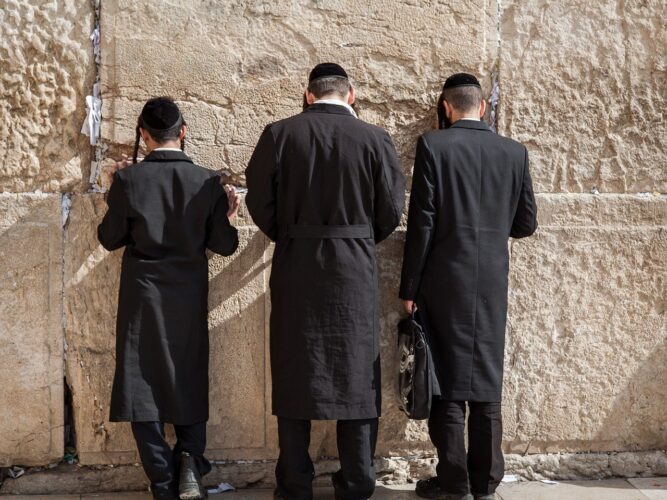
People connected to the Messianic Jewish movement and Evangelicals with passion for Israel often have a significant understanding of the High Holidays in the Bible and in Judaism.  This is the period between Rosh Hoshana and Yom Kippur.  Some have a depth of understanding.  However, it amazing how many have no significant understanding at all, maybe the majority. 

The High Holidays are the holiest time of the year on the biblical Jewish calendar. Sadly, in my view, the name Rosh Hoshana and part of the theology of the day in Judaism obscures some important meanings.  It was not wrong for Israel to adopt the New Year date of the ancient Near East just as we in the West celebrate January 1st.  However, the idea of that the date is really the anniversary of the creation of the world is speculative.  By calling this the first month, we obscure the meaning that stems from Nissan, Passover month, being called the beginning of the year in the Torah.  So yes, we can have new year meanings for the 1st of Tishri, but this should be secondary, and the emphasis should be on Tishri being the seventh month, the primary meaning.  Seven is the time of perfecting.  

In the seventh month on the first day, we hear the sound of the shofar, hence the Biblical name Yom Teruah, or the blowing of a trumpet.  Teruah is the sound of that blowing.  The Bible also notes silver trumpets at this time, but this has also been obscured.  We do have a new beginning due to the meanings of these holidays.  The blowing of trumpets means that we are to get ready, for we are entering into a time judgment by God and seeking forgiveness and atonement whereby we will not fall under God’s judgment but his mercy, forgiveness, and grace.  This is why we have the trumpet emphasis in the book of Revelation, and the last trumpet emphasis in I Cor. 15 that is sounded at the return of Yeshua.  Rightly, in Jewish tradition for this season, we are reminded of the last judgment and the Age to Come.  The day is fraught with eschatological meanings. The trumpets are connected to Passover and exodus as well, the trumpet was heard at Mt. Sinai.  Therefore the book of Revelation includes both meanings.   Following this day, a Sabbath, we have the intermediate days leading up to Yom Kippur on the 10th of Tishri.  The Sabbath in that mid-period is called Shabbat Shuva, the Sabbath of return and repentance.  Repentance is a daily exercise but is especially emphasized now so that all will repent. 

The holiest day, Yom Kippur, the Day of Atonement, is a time or fasting, of self-searching, repentance, recommitment, and receiving of forgiveness/atonement.  The prayers of the synagogue are mostly corporate.  We pray for the sins of Israel since the sin of any is part of the corporate sin of the nation.  Lists of sins are comprehensive.  Unless one understands this corporate dimension, he or she will not think that all of it is relevant to them, though the lists can point of individual sins.  Westerners are so individualistic.  We need to learn the importance of corporate intercession.  We especially thank God for the book of Hebrews which shows us the great fulfillment of the meaning of Yom Kippur in Yeshua.  He is both our High Priest and our sacrifice.  He enters into the most holy place in heaven with his own blood procuring the fullness of our forgiveness and the perfecting of our conscience.   The sacrifices of old in themselves could not take away sin. Their meaning is participation in the sacrifice of Yeshua who is the Lamb slain from the foundation of the World.  We can see an anticipation of this in the Jewish teaching that all the sacrifices were only efficacious because they participated in the sacrifice of Isaac who was offered in the place where the Temple would be built.  However, Isaac is not divinity and is only a type, a foreshadowing of the great antetype, Yeshua our High Priest and Sacrifice.  All the images of atonement in the Torah find their fullness of meaning in him.  

There are also last days (eschatological) predictions of atonement that show Yeshua’s sacrifice will be provided for the sins of the whole world.  In John, we read, “Behold the Lamb of God who takes away the sins of the World.”  The vision of the conversion of the nations who all go up to Jerusalem in Isaiah 2 is only possible if the sacrificial atonement of Yeshua is applied to them.  In Zechariah 13 we read that a fountain will be open to Israel for her cleansing.  From this text we get the famous hymn, “There is a fountain filled with blood drawn from Immanuel’s veins, and sinners plunged beneath that flood, lose all their guilty stains.”  I also believe optimistically in interpreting Rev. 1:7 when all the nations see the returning Yeshua and morn.  I think they mourn for their sins and rebellion against Yeshua, the King.  This is why the survivors of the last wars can go up to the Feast of Tabernacles in Jerusalem to worship the King every year, a fitting parallel to Isaiah 2.  Yom Kippur looks toward the future application of the blood of Yeshua to all the nations on earth. 

Mutual Blessing

Some people find the word blessing to be vague.  However, the word could be translated enrichment, a gift that brings benefit.  I wrote a book entitled Mutual Blessing, to argue that the whole universe is arranged in an order of mutual blessing or enrichment through interdependence.  The beginning of the Bible reveals God’s order of mutual blessing while the very end, Revelation 21, 22, shows this order brought to its climactic fulfillment.  Understanding mutual blessing enables us to understand God’s purposes and gives us a glimpse of our eternal state.  

Genesis 1 presents the six days (cosmic days in my view-see Gerald Schroeder, The Science of God), and as the days progress we see an expansion of wonderful variety and beauty.  God blesses each day and declares the creation good.  He is blessed by it.  God, by his own choice, makes himself partake of interdependence for mutual blessing.  God and nature are in a relationship of mutual blessing.  The seventh-day rest is best understood as the day that the great Artist steps back from what He had done to enjoy it!  Human beings and nature are in a relationship of mutual blessing. That human beings are to care for the garden shows that the garden will bring blessing and human beings bring a greater quality of fruitfulness and beauty to the garden.  The plants and animals are dependent on one another for mutual blessing. The bees pollinate the fruit flowers and provide the bees with their food.  The fruit trees provide fruit for animals and human beings.  Human beings care for and bless the trees.   Science tells us that the very position of the galaxies are exactly tuned to provide for life on earth.  The beauty of nature blesses humankind.  Humankind is charged to be a good steward of nature, which is implied by ruling as a vice-regent of God, the meaning of being in the image of God.  

In human life itself, there are arrangements of mutual blessing that astonish us when we think about it. The artist and his patrons and those who enjoy his art.  All are enriched.  The entrepreneur who cares about his employees enriches them, and they him in return.  The inventor blesses with his invention and is enriched by the benefit it brings along with the income.  The manufacturer produces a product to enhance the lives of those who purchase the product.  He and the employees are enriched in return. The teacher and student are mutually enriched.  Parents and their children are in mutual relationship of interdependence for mutual blessing.  It is an awesome relationship.

The male-female distinction is one of the greatest examples of distinction and interdependence for mutual blessing. From such blessing comes the enrichment of children. This distinction for mutual blessing, especially in biblical based marriage, is so enriching, I can hardly begin to get my arms around it. I am awed by it daily.  It is overwhelming.  God’s design in covenant monogamy is the greatest fulfillment of this distinction for blessing. 

However, the greatest of all mutual blessing of all is the human relationship with God.  God finds fulfillment somehow in our love and relationship with him.  We find our fulfillment in God’s love and relationship with us.  He is the one who makes all the distinctions in creation for mutual blessing.  

The eternal state, everlasting life, is an enhancement and perfection of these aspects so that we can enjoy God and one another along with nature, art, and beauty as it will be in that age forever.  

The Devil is the great leveler.  He desires to destroy distinctions, destroy the order of mutual blessing, and then destroy the creation in his hatred for God and humankind.  Can we see some of this both in environmental destruction and in the rebellion against the biblical order for the male-female distinction?   

This book was written so that you might enjoy life with greater fullness and that you are prepared for eternity.  The best is yet to be. 


Is God a Narcissist

One of the objections I periodically get from people who question biblical faith is that it appears to them that the God of the Bible is a narcissist. The Bible is filled with exhortations that we are to love God, honor God, obey God, worship God, and on and on. Indeed, it seems that He desires to have all the glory and says so.

It is not until we get to the pages of the New Covenant Scriptures that we find a very different picture. I first understood this solution from lectures given by the great Francis Schaffer at Wheaton College in 1967. The solution is in understanding more deeply the nature of God. Yes, the solution is in his Triune nature. Our one God is a God of three persons, in such deep unity that we can say that we have one God, but in sufficient distinction that a relationship of love is the eternal basis of all. That eternal love is the love of constant giving and receiving. The images in the New Covenant Scriptures and especially the Gospel of John give us this new foundation. We can now understand the meaning of “God is Love.” How can God be love before He created? Was he just loving himself as a narcissist? But before the world was created, this love existed in God. Yeshua says in John 17:5, “Father, glorify Me together with yourself, with the glory which I had with you before the world came to be.”

John 16:17, “The Father Himself loves you because you have loved Me.’
John 15:9, “Just as the Father has loved Me, I also have loved you. Abide in my love.”

Yeshua tells us the nature of this love; it is self-giving to the other, not selfish. In John 15:13 we read, “No one has greater love than this; that he lay down his life for his friends.” The Father in himself will greatly suffer in the sacrifice of his Son since he so deeply loves him.

In John 16:6, we read that it is to the advantage of the disciples that Yeshua go away because He will then give the Spirit. He will convict the world. He is part of that relationship of love. Abiding in the Spirit is abiding in Yeshua.

Eternal self-giving love is the foundation of all reality. The commandment to love God is a call to participate in the self -giving love. We love him because He first loved us, but we cannot enjoy the mutual blessing of this love unless we return it and love God. If we do not enter into receiving God’s love and loving Him in return, then we will eventually be given to more self-centeredness. The narcissism that is in all people, will then dominate those who will forever be lost. So, the objection of narcissism is actually the opposite of what is claimed, and loving God is what delivers human beings from it. Those who glorify God will themselves be glorified!

Sadly, when we share this understanding with Jewish people and ask how it is that their God is not alone and loving Himself and how that is not narcissism, they have no answer. They appeal to mystery, but do not want to see the richness of the answer of the New Covenant Scriptures and the Triune nature of God. So, yes, a person can claim God is love but have no way to convincingly present the idea of God to show this. However, Messianic Jews and Christians do have the answer to the dilemma.

The Exchanged Life

In 1978, I became the leader of Beth Messiah Synagogue outside of Washington, D. C.  A young couple in the congregation soon became friends, Jerry and Jo Miller, who had met and married during the days of my predecessor Manny Brotman.  Jerry became a young elder and eventually served as the primary local pastor after Eitan Shishkoff made Aliya to Israel.  Recently Jerry completed a book on the grace of God, what it is, and how it works in bringing transformation to our lives and conformity to the image of Yeshua.  It is the best book on grace that I have ever read.  We hope to see it published. 

Sometimes in my devotions, I sing old hymns and meditate on them if they have depth.  This seems strange to some of my Messianic Jewish friends.  Yes, I enjoy the traditional prayers which are often very biblical in content but at best they are prophetic of Messiah and not able to convey the fullness of what is ours in Yeshua.  As the doctrinal statement of the Union of Messianic Jewish Congregations says, we are to be enriched by the best of the Christian tradition.  Many hymns fit this tradition.  Jerry’s book on grace is wonderfully summarized in a hymn that I recently rediscovered.  I probably have not sung it since high school.  It was written by William Sleeper, a prominent congregationalist pastor in Maine in the 19th century.  It reflects a teaching on grace called the exchanged life.  This became part of the Keswick Conference in England and then in New Jersey.  They also believed in a second blessing and with Methodist influence were predecessors of Pentecostalism.   Here is the wonderful verses on what is available to us through grace.  Yes, it is all of grace. 


  1.  Out of my bondage, sorrow and night, Jesus I come, Jesus I come;

 Into thy freedom, gladness and light, Jesus I come to Thee;  

 Out of my sickness into Thy health, Out of my want and into thy wealth

 Out of my sin and into Thyself, Jesus I come to thee.


  1. Our of my shameful failure and loss, Jesus, I come, Jesus I come

Into the glorious gain of Thy cross, Jesus I come to Thee.  

Out of earth’s sorrows into Thy balm, Out of life’s storms and into Thy calm;

Out of distress to jubilant praise, Jesus I come to Thee


  1. Out of unrest and arrogant pride, Jesus I come, Jesus I come;

Into Thy blessed will to abide, Jesus I come to thee;

Out of myself to dwell in Thy love, Out of despair into raptures above, 

Upward for aye on wings like a dove, Jesus I come to Thee.


  1. Out of the fear and dread of the tomb, Jesus I come, Jesus I come; 

Into the joy and light of Thy home, Jesus, I come to Thee.  

Out of the depths of ruin untold, Into the peace of Thy sheltering fold, 

Ever Thy glorious face to behold, Jesus I come to Thee.    Amen.  

Israel, the Church and the Last Days

In the 1980s it seemed that I was growing in understanding the Bible in new and more accurate ways.  One of those understandings had to do with the Bible’s teaching on the Last Days or Eschatology.  When I finished Wheaton College, I was a skeptic about such teaching and much else.  Then my spiritual father of dear memory, Dr. Chaplain Evan Welsh, at Wheaton in 1970 gave me a book on the Gospel of the Kingdom that began to clarify the Bible for me.   It was based on the idea that Matthew, Mark, and Luke present us with a unified understanding of the Kingdom of God.  The coming of Yeshua into the World meant that the Kingdom of God had come, but in an unexpected way, an “already not yet way.”  The Age to Come had broken into this World in the ministry of Yeshua, in the miracle manifestations of his life and teaching and that of his disciples, and then even more with the outpouring of the Spirit at Shavuot or Pentecost.  The Kingdom was where God’s rule was made visible.  Now we are in between the ages period.  The Gospel is now the invitation to enter the Kingdom as it is a presently constituted and to live in and from it in the power of God and through the death and resurrection of Yeshua and the outpoured Spirit, and to be part of Kingdom communities of the Spirit that manifest this Kingdom.  However, at the and of the Age, Yeshua will return and His Kingdom will come and be established on earth.  This is the fullness of the Kingdom.  Therefore, when we speak of the Last Days today, we should distinguish between the Last Days that began in the first century and the last of the last days that will come just before the Second Coming of Yeshua.  This is an amazing key to understanding the New Testament. 

However, in the 1980s we came to new understandings of much more.   This included the teaching of what I call today the five pillars, the things God will accomplish before the return of Yeshua.  This includes bringing his people including his leadership into unity (John 17:21), the world revival that will fulfill the not yet part of the Spirit being poured out (Acts 2, Joel 2:28-30) the completion of the witness of the Gospel of the Kingdom in every ethnic group (Matt. 23:14, 15), the effective witness to the Jewish people making them jealous for Yeshua (Romans 11:14,15), and the leadership of the last days people of God that will be zealous for the previous four.   

There are also details about the last days, the lineup of the nation, Israel being a back in the Land as a key to making Israel jealous, the coming of the antichrist, and so much more described in the Bible.  Putting all this together is a bit dicey, but we think we have a very good presentation. 

Our book Israel, the Church and the Last Days, was the product of a course I jointly taught with Asher Intrater in our school, Messiah Biblical Institute in the late 1980s.  Both of us wanted to teach the course on the last days.  We did not know the other’s views.  When we compared notes we saw that we had the same basic understanding.   Therefore, we team-taught it and wrote the different chapters in the book.  The book has been revised.  The well-known leader, Dr. Jack Hayford, said it is one of the best presentations he had seen.  It is not a difficult book to understand.  You are getting a very brief summary here.  I would encourage you to avail yourself of the opportunity to read this book.

The Book of Revelation in Our Times

The Book of Revelation provides us with some of the most controversial debates on the interpretation of the Bible.  Yet we are told that we are blessed if we read the book and it is so important that there are great penalties for adding or subtracting from the book.  Certainly, the people to whom it was first sent must have been able to have a basic understanding of it.  Some years ago, Merrill Tenney, the dean of Wheaton Graduate School, wrote his very helpful Interpreting Revelation.  You had to read very carefully to know which view he held as he well presented the four basic views of the book, Symbolic, Historicist, Preterist, and Futurist.  The first says it is a manual of spiritual warfare for believers in every generation and should not be about literal references either to historical or future events, though the conditions at the time of writing could be understood to some degree.  Then there was the historicist that thought the book spanned the course of history from the first century until the second coming.  The third states that it was all past and its prophecy complete at the end of the first century.  Popularizers today say, “The Tribulation is past.”  Wow! I am sure glad that that is over!  But seriously, I don’t think that this view is credible.  The final one is the futurist interpretation that the book is mostly about the end-time events just before the return of Yeshua.  The great Dr.Richard Longenecker taught this view to our class when I was in graduate school and most Evangelicals in the 20th century held this view.  After much study, I came to believe a combination of the symbolic view and the futurist view.  The symbols are such that the book is meant to strengthen all of Yeshua’s followers who are going through times of great trial and persecution.  They could be the last generation before his return.  They are to see themselves in the pages of this book.  However, I also came to believe that the last generation before Yeshua returns will find this book fitting their situation more than any other.  They will experience the progression of the events symbolized in this book.

Then some years ago, during a prayer time, I believe I was given an interpretive key.  It was that the book of Revelation followed the pattern of Passover-Exodus in the book of Exodus.  This included a seven-point outline of the progression of the book.  Since that time, more scholars have looked at the symbolism of Passover and Exodus as the primary symbols for interpretation with other Feasts also referenced.  The parallels are amazing, the Anti-Christ and Pharaoh, the false prophet-magicians of Pharaoh and the true prophets, Moses and Aaron, and the prophets in Revelation 11 and the false prophet in Rev. 13.  The progression of the plagues are parallel to the plagues in Egypt but now of greater intensity and worldwide in scope.  There is so much more including the ultimate deliverance of God’s people at the return of the Lord just as Israel was rescued at the Red Sea.  Those who have read this book have said that it was enormously helpful.   The book has received very positive responses.  So do read the book of Revelation and do not be put off by the symbolism.  I explain many of the symbols to enable you to better understand this book.

The Case for What We Believe:  The Biblical World View, an Apologetic 

Some of my followers know that from the age of 19-22 ½ for 3 ½ years, I want through a very difficult time of skepticism.  I sometimes called myself an agnostic, but was an agnostic looking for a positive faith, a place to stand, that would give meaning.  The childhood faith from 12 ½ to 19 years when I was in my first semester as a Sophomore in College, just seemed to fall apart.  Those were wonderful years for me, but now I would pursue the study of philosophy and religion on a serious level, ending up as an assistant in the department in Philosophy of Religion at Wheaton College in Illinois.  When I graduated, I had made progress. It seemed to me at the time that Christianity (this was pre-Messianic Judaism) was the best option among religions. It had the most evidence to its credit.  Yet, I was not convinced it was enough.  Maybe there still was no true faith. I was reading so many books and looking to see if there were credible miracles to prove the supernatural realm.  I did eventually find some.  I continued my studies for two years in graduate school emphasizing the philosophy of religion and theological studies.  Finally in the Spring of my first year, 1970, I was sufficiently convinced that I recommitted my life to Yeshua.  All of that study and searching amazingly led to credibility with the professors such that in the fall of 1971 I was appointed a visiting professor in apologetics (the evidence for our faith) and philosophy at Trinity College (today Trinity University).  For three years I taught the upper-class students. 

I continued to teach over the years and from time to time was called to teach this course as a visiting professor and have done so in recent years.  Finally, I put my teaching into a book, The Biblical World View, An Apologetic.  The book is unique.  It is not the longest apologetics book, but it has a unique comprehensiveness.  The book puts together and integrates the subjects in ways that I have not seen in any other book.  For example, the book covers the basics of how to know something is true and how to weigh evidence for making a truth decision. It integrates the relationship between spiritual experience and rational reflection on the evidence.   The book also deals with culture and how cultural directions from alternative world views show an inability to bring fulfillment and happiness or how they fail and why.  We deal with the basic evidence for the existence of God, including the evidence of design that is now so clear in the cosmos as a whole, and also with the microcosm, especially biological cell life that shows with great certainty the wisdom of the creator.  Cell life cannot be in any way explained by chance evolution. Contemporary authors are quoted to bolster the case.

We then present an answer to the problem of evil.  Is God all-powerful and good?  We put this issue in the framework of creation, fall, and redemption as the ultimate explanatory terms for our faith.  Then we present the historical evidence of our faith from the Bible, fulfilled prophecy in Yeshua, and wonderfully the historic evidence for the life, death and resurrection of Yeshua. We include the evidence of the outpouring of the Spirit in Acts 2 and the book of Acts as the only explanation of the expansion of the faith in the first century.

Then we present the evidence from faith experience today; the power of Gospel transformation in the lives of people.  We also present contemporary miracles that happen in the name of Yeshua where there is no possible natural explanation.  We give wonderful examples.  Then finally we give the case for the trustworthiness of the Bible as the foundation for our faith. 

I am sure that if a person spends the time to go through this book, they will be much more grounded in faith and will be more able to interact with the many questions that arise.  I encourage you to acquire this book.  This book fits the issue of know why you believe. My other books are to help you know what to believe.

Barna and Discipleship

Some of my readers are familiar with the Barna Group founded by George Barna and the important work they do by surveys that tell us where the Church and its members are.  One of those areas of the survey is on basic discipleship, including knowledge of basic doctrine.  My readers can do an internet search of Barna and easily find the progression of studies from year to year.  My Anglican friend form Graduate School days from 49 years ago, David Virtue (who publishes Virtue online) sent a summary of an update.  As usual, it was sad and alarming.  Even such basic knowledge as salvation by grace versus works was unclear among the Evangelicals surveyed. A majority said that one could be saved by being a good person!

It raised some questions.  I am puzzled. Where did the pastors go to Bible school or seminary if they did?   Did they not think it important to emphasize basic truths so that everyone would know the truth and would at least be able to answer the basic questions of our beliefs.  When I was 12/ ½ I started attending an evangelical Reformed Church congregation.  I was not there for a month before I learned that salvation was only by grace through faith.  I prayed to receive Yeshua by faith, April 1960.   One of the first verses we had to memorize in Sunday school was Titus 3:5, 6, “Not by works of righteousness which we have done but according to his mercy he saved us.”  Eph. 2:8,9 were next, “By grace are you saved through faith and that not of yourselves.  It is not by works lest any man should boast.”  Forgive the King James.   Of course, there was John 3:16.  When I was 15, I attended catechism classes every Saturday morning for a few months.  We memorized the answers to questions about our faith which established basic doctrine in our hearts.   I also recalled outreaches some 30 years ago.  There was a two question test.  “Why when you die should God let you into his heaven?”   Of course, it was on the basis of grace and the atonement for our sins by the death of Yeshua.  There was the basic presentation of the Gospel in the Four Spiritual Laws, which I would correct by a more Kingdom emphasis.  However, the basics were there.  I wrote Growing to Maturity to disciple in basic knowledge and growth.  Then knowing that catechism was very helpful I wrote the Growing to Maturity Primer as a catechism in a Messianic Jewish contest. 

What happened?  Barna is not even talking about deep discipleship but that people in Evangelical Churches are not clear on the Gospel itself and salvation by grace through faith. What do pastors in such churches teach?   Friends, help me out here?  How can congregations really grow if the people do not understand the Gospel?

A Cry for Deeper Discipleship/ Growing to Maturity

Yeshua commanded the disciples to go and make disciples of all the nations, immersing them and teaching them to observe all that He commanded them.  The goal of discipleship is to “be conformed to the image of His Son,” (Romans 8:29).  This is God’s destiny for all who are in Yeshua.  When a person enters the Kingdom through the preaching of the Gospel, they enter a whole new realm of resources to enable them to grow.  Salvation by faith, when unpacked in meaning, includes pledging our allegiance to Yeshua.  We then have the gift of being immersed in the Spirit, have his living presence, and the gift of the Word of God by which we can grow in understanding.  The Word actually has real power to change us through the Spirit. 

As a young pastor, I was troubled by the number of people in my congregation who just seemed so far from biblical responses to others, their spouses, to their children, to fellow members in the congregation (48 years ago).   Since that time, I have seen such a plague of divorce among those who profess faith in Yeshua.  I came to believe and still believe that the primary issue is the failure to disciple and to become disciples.   I often assert one axiomatic affirmation, that two people who are conformed to the image of Yeshua will have His love for each other and divorce becomes impossible.   

So, how does discipleship take place?  I came to understand 45 years ago that preaching is not the key to discipleship.  Spirit-inspired preaching can bring people to repentance and to a commitment to discipleship, but usually, discipleship is a matter of mentoring by a person who has grown to a significant level of spiritual maturity.  Since that time studies have overwhelmingly confirmed my conclusion.  The key is to establish structures of small groups with mentor-leaders who can disciple and then those who are discipled can disciple others.  Discipleship includes establishing a solid devotional life first of all, then learning how to know the presence and leading of the Spirit.   The Word will also show sin that requires repentance. There is deliverance ministry, how to build faith, corporate worship, and commitment to life in the Body.  The most effective disciple-makers  I have ever known finds himself discipling pastors who have never really been discipled. 

Why are we not obeying what Yeshua commanded and understood that discipleship is one who has learned to obey all that he commanded?  It is because it is much easier to give a weekly message and depend on that.  Secondly, when leaders embrace the call to disciple, they will sometimes find people who are unwilling to deal with some serious sin patterns in their lives.  There is a protective wall of self-defense.   This calls us to emphasize prayer and the conviction of the Spirit to bring a person to the humility to address the areas of life that are resistant to the ways of Yeshua.

When I began to see the centrality of discipleship, I first created seven lessons on discipleship that I first used with a couple I led to the Lord and another who came to us as new believers.  These seven lessons eventually were expanded into the book Growing to Maturity, which was published by the Union of Messianic Jewish Congregations in 1982.  It has been through several editions and its latest edition now is published by Lederer/Messianic Jewish publishers.  It is also in Russian, Spanish, and Hebrew.  It has been the most used book for discipleship in the Messianic Jewish world.  It is also a foundational doctrinal manual.   I have been amazed to find so many still use this book and write to say how helpful it is.  It is strange that there are not many other examples of such books.  This book presents its theology from the original Jewish context of the Bible and does give the foundations for understanding the Bible.   If you do not have a copy of this book, do obtain a copy.