The Gospel and Hate Speech 

I believe that we will soon see the more radical left attacked churches and religious institutions as purveyors of hate or at least hate speech.  Already former presidential candidate Beto O’Rourke called for removing the 501C3 non-profit status of all religious bodies who do not profess support for the LGBTQ agenda.  Another called for Christian Colleges to lose their accreditation.   This movement against Christianity, and we could add Orthodox Judaism and Islam (though the last is given a pass due to more anti-Christian orientations of the radical left) requires changing the definition of words.  Hate is now defined as disagreeing with a behavior.  Phobia as well is defined as disagreeing with a behavior, not as really being afraid of.  Maybe some are afraid of what the LGBTQ agenda will do to society, but most Christians are compassionate toward LGBTQ people. 


The central problem with the Gospel for the folks who will reject it as hate is that the Gospel requires repentance from sin.  Only when a person realizes that he or she has violated God’s Law which defines sin and are thus in danger of eternal Hell, do they realize that they are in need of the atonement of Yeshua.  Classical preaching of the Gospel brilliantly put forth the Law of God, described sin, the danger of Hell, and then called for people to repent and receive the atonement of Yeshua and submit to the Lordship of Yeshua.  This is fully in accord with the teaching of Yeshua in John 15 where He said that the Spirit would convict the world of sin, righteousness and Judgment.  Only when such conviction comes, does the person submit to the righteousness of Yeshua and have a sound conversion.  


Sin is defined by the Torah (I John 3:4).   The presentation of the Gospel includes the call to repent of sexual sin.  The teaching of Yeshua on lust in the heart (Matthew 5) and on the inviolability of monogamous heterosexual marriage as the only now God-ordained order for sexual relationships, sets the Gospel squarely against the libertine views of sexuality in our culture.  When one says that all unbiblical sexual relationships are sin, must be repented of, and then avoided by the power of new life in Yeshua, this places the one submitted to the Bible’s teaching squarely against the politically correct acceptance of all alternative sexual lifestyles including pre-marital sex.  This is the center of battle right now.  Of course, Scripture says much about greed, hardness of heart to the poor, lying, taking God’s name in vain, and idolatry of every kind.  


The question is, will Yeshua/believers shrink back against presenting the Gospel due to their being subject to much rejection in today’s culture.   We cannot but to declare what constitutes sin according to the Bible.  We declare from Romans, “All have sinned and come short of the glory of God,” and “the wages of sin is death, but the gift of God is eternal life through Yeshua HaMashiach our Lord.”  Romans 3:23, 6:23.  We have to reveal both what God declares as sin leading to death and the remedy in the atonement of Yeshua. 

Restoring Jewish Roots to the church

I have been a shepherd in the Messianic Jewish world for 48 1/2 years now.  The primary focus of the Messianic Jewish movement was and should be winning and discipling Jewish people.  However, there is a second and important purpose.  Our existence raises questions that give us an opportunity to restore Jewish roots to the churches.  And what did we mean by that?  First of all, it was to see the churches, first with its leaders, to understand the Bible in its original Jewish context.  This meant that “replacement theology” the doctrine that the Church had replaced Israel and was the new and true Israel would be rejected and secondly that the election of the Jewish people/Israel would be solidly embraced.  This as well would lead to a much better reading of Scripture.  We also intended that the Church would embrace the foundational stand of the Messianic Jewish congregations, that Jews who come to faith in Yeshua are called to identify and live as Jews.  The Messianic Jewish movement was not against the Protestant Evangelical heritage but affirmed it.  We wanted to add understanding to it.  Restoring Jewish Roots did not mean destroying the Christian heritage, whether holidays, worship on Sunday, Christmas carols and other Church practices, hymns, liturgy, and holidays which were not contrary to the Bible.   


However, some years later, in the 1980s a Jewish Roots Movement began that was apart from the Messianic Jewish world.  Some teachers were solid, with very good teaching and some took wrong turns that brought us great concern.  At its worst, some promoting Jewish roots taught that Christians, the churches, were responsible to keep the Sabbath and  Jewish Feasts according to the Biblical calendar and more.  This came close to what we dubbed “One Law Movements,” which the Messianic Jewish movement worldwide largely rejected.  What then do we think restoring Jewish roots should entail.  I outline here the first two categories which we desire and then two further categories which we think violates the teaching of Galatians and Colossians 2 and Romans 14.  


  1. We desire that the Bible be understood in its original Jewish/biblical context.  This means that we study the whole Bible.  As part of this, we desire that the churches and its leaders would understand the weekly Sabbath and the Feast of Israel including:  a. their historical meaning in ancient Israel and the historical events connected to them, b. their ancient agricultural meaning, c. how they were brought to fullness in the first coming of Yeshua and finally, d. how they will yet be fulfilled and are prophetic of the last of the last days and the Age to Come.   The patterns of life given in the Bible for Israel have universal meaning that all are called to understand.  
  2. We desire that the Church would understand its own heritage in its connection to Jewish roots.  The Church celebrates Good Friday as the recognition of the death of Yeshua as the atonement for all.  Good Friday is rooted in and participates in Passover meanings and this should be taught and understood by the Church.  It is especially fitting that it be taught on Good Friday to bring out the fullness of Yeshua’s sacrifice.  Also, Pentecost is celebrated as the anniversary of the outpouring of the Spirit (Acts 2).  The Jewish Feast should be understood as its background and why God chose this Feast for the outpouring with all of its harvest meanings  

These first two points are explained in my books Jewish Roots, and Israel, the church and the Last Days.  We think it is appropriate and fitting for the churches to pray and be led by the Spirit to join with Messianic Jews during the seasons of the Feasts for celebrations near the days of the Feasts. But this has to be by the Spirit and not by any enjoined rule or sense that it would be superior to others that do not so embrace such celebrations. For us the Fall Feast of Sukkot (Tabernacles) which Zechariah 14 denotes as the international celebration of the Kingdom of God could be a special time together. On the Saturday night during Sukkot week, we used to have a great interchurch celebration.


  1. The third category is that it is better and so much richer if the churches give up their Christian Holy Days, and embrace instead the Biblical Holy Days since they are the Feasts of the Lord.   (On the contrary we believe that embracing such Holy Days is a matter of freedom and the leading of the Spirit.)  Teaching a superior tradition for the churches in our view goes over the line of the clear warnings of Colossians and Galatians.  These days are a shadow, and no one is to judge for the way gentiles embrace these celebrations or do not.  Even the Sabbath is taught as principle (Heb. 4) but is never enjoined as something that should be kept for gentiles during this transitional age. 


  1. The fourth category is a more serious violation of Scripture when some teach that all Christians should keep the Torah in the same way that Jews do.  Hence Jewish Roots is defined as keeping the Feasts, the Sabbath, and the food laws.   Jewish roots is said to be thus restored.  Scripture is explicit that this is wrong and that those who are not Jewish and circumcised are not responsible to keep the whole Law but only universal law.  Of course, the details of this false view are problematic. What days do we keep?  According to the Rabbinic Lunar calendar which we use in Israel?  Most scholars today think that the Biblical calendar was a solar calendar and sometimes the Church Feast Days are closer to the Biblical days than the Jewish calendar.  It is interesting that there is not one New Testament verse that exhorts gentiles to keep the seventh-day sabbath or the Biblical Feasts according to Biblical dating.  


The Jewish Roots movement becomes a source of division rather than enrichment when it goes over the line to #3 and #4.  


ON FAIRY STORIES: A Little Piece for Chanukah and Christmas

During graduate school, I was fascinated by a presentation by the famous apologist, Dr. John Warwick Montgomery, on J. R. R. Tolkien’s essay On Fairy Stories. Tolkien argued that all great fairy stories, and often great literary classics presented a general pattern that fit the Biblical narrative.  Things start well, but then something happens whereby things go terribly wrong with great trials and suffering, but then there is redemption and victory for the good people, and they live happily every after.  This, is, of course referring to the Biblical account where the human beginning is in the paradise of the Garden of Eden, but then things went terribly wrong through the temptation of the Serpent.  Human life often became a trial of suffering.  However, there are harbingers of the ultimate redemption and the great turn around in Israel’s escape from Egypt and entering into the promised land.  Then there is the promise of the coming of the Messiah who will bring final deliverance for Israel and the healing of the nations.  All will live in peace and joy under the rule of the Messiah.  It is the great reversal. The coming of Yeshua began the process that will lead to the completion of redemption and to the “happily ever after.”  So many sense that they are made for the happy ever after end. 

Tolkien’s masterpiece, The Lord of the Rings, is one of the greatest fairy stories.  Tolkien was firm on his exhortation that we should not see the novel as an allegory of the Gospel.  However, that does not mean that it does not generally participate in a Biblical orientation because all great fairy stories do so.  Only recently was I able to obtain a copy of this essay which I had read over 50 years ago. 

My favorite Christmas Story is It’s a Wonderful Life. In this great classic we find that every good life touches many people, but we don’t often see it.  When one life influences for good, that person touches others who touch others. The great thing about this story is that the lead character does find out that his life has been a wonderful one.  Of course, he lives happily ever after. Now one does not really ever live happy for forever in this present life.  Rather, he lives happy forever only in after the consummation and the return of Yeshua. 

Chanukah is a preparatory story, a fairy tale in real life, real history.  It tells us how Israel was delivered and re-attained their independence as a nation after terrible oppression under the Syrian Greeks.  Without Chanukah there is no coming of Yeshua to a Jewish living nation in the first century. Chanukah tells a proximate fairy tale for the happy forever does not last.  Alas, the descendants of the Maccabees become corrupt.  Then the nation was then conquered by Rome.  Eventually the Romans destroy the city of Jerusalem and the sanctuary.  The Christmas story brings the most amazing tale of the incarnation of Yeshua that leads to the amazing victory of the death and resurrection of Yeshua.  But this is not the end of the story.  That ending, the final happy ever after ending, comes about only in his Second Coming.  We are in the middle of this greatest of all fairy stories, spreading the Gospel of the Kingdom, suffering, rejoicing, and onward until the final victory.  That is the ultimate happy ending forever. 


A Call for a Dialogue Between Black Evangelical Democrats and Evangelical Republicans, White, Black and Hispanic in light of the Georgia Senate Races

The leader of the African Methodist Episcopal Church is seeking to mobilize the members of his churches to vote for the Democrat candidates for the Senate in Georgia.   Meanwhile, the other Evangelicals in Georgia are mobilizing to support the Republicans.  Two seats are up for grabs and will determine whether the Senate is Republican or Democrat, whether it is a firewall against the more radical Democrat policies or whether there will be Democrat control of the Presidency (if Trump cannot prevail), the Senate and the House.  The present battle is super intense with money pouring in from around the country.  There are also real issues on whether or not Georgia will again use the controversial Dominion voting systems or whether or not the same weaknesses in voter identification are repeated as in the November election. 

Though the unitary support for Democrats among blacks declined in the last election, Black Evangelicals still vote Democrat.  It is hard for the Black Evangelical Democrats to understand how their brothers and sisters in the faith can vote for the party they see as not supporting the government help that they need, both in welfare, housing, and public education.  For them, this is the overriding issue.  Abortion for example is a choice that others make even if wrong, but this is less the problem than allowing the poor to continue to be in want.  No one forces a person to have an abortion, but poverty leads to real destruction as well.  They also are not seeing challenges to their religious freedom or the LGBT agenda since this is not the world of their concern or interaction.  Abortion is common in the black community. 

The other Evangelicals cannot see how the Black Evangelical Democrats do not see how legalized abortion brings the judgment of God. How can they not see how it has undercut their own population?  They do not understand how their brothers and sisters cannot see that the very policies they think are crucial are the very ones that keep their poor in the cycle of poverty.  They point to vouchers in education as a game-changer for the poor.  So also enterprise zones and economic development are crucial. The moral issues of support for the traditional family are also central to them. They know their brothers and sisters are morally conservative but do not see how they cannot see that the culture is now going in directions that destroy the morals of the community.  Can’t they see the dangers to religious freedom and the cancel culture?

These two communities are like ships passing in the night.  Wouldn’t it be wonderful if the key leaders of these two groupings could meet for an extended dialogue with heart sharing, some scholarly papers (with understandable language), and interaction? I think this would be great. Could there be some empathetic listening?  This happens all too rarely.  Maybe some positions would change, but at least there will be deeper understanding.  


Thoughts on Prophetic Ministry

I have been connected to the ministry of prophecy for some 45 years, first in ministering to troubled people in Chicago when I would get a strong sense of how to proceed and sometimes had information that surprised the subject of the ministry.  However, I had not yet witnessed the type of prophetic ministry that astonishes.   In the years from 1984 until the present, I witnessed several meetings where prophetically gifted people could call people out of an audience by name and give them descriptions of what they were going through and confirm things for which they desired or needed confirmation.  The minister was not given the name of the person receiving the word.  I personally knew the people in charge, people with great integrity.  One was John Wimber.  Sometimes prophets would speak about world events or make predictions on coming events.  The track record on this was spotty. If there is an astonishing level of personal prophetic ministry, accuracy, we tend to credit other words that such prophets deliver.  I think that this crediting is questionable unless they have accuracy on such a level of prophecy. Some say that prophets leave the lane of their calling and authority and miss it on these other levels.   Early in the 1990s, I noticed that prophetically gifted people had much greater accuracy when they were submitted to apostolic and pastoral authority.  

Personally, I have written that prophetic ministry has never failed me (in 45 years).  I don’t mean by this that I was not given wrong words.  That happened several times.  I knew they were wrong words.  However, I have received many words from those with strong giftings, astonishing words with amazing accuracy, and always fulfilled when I confirmed them strongly.  For example, when my son was dying with incurable myocarditis in 1987, the doctors told us to look for a burial plot.  Dr. Michael Brown prophesied that our son would be totally healed, normal, and it was not a matter of our faith but an absolute word, a decree.  Another anointed prophet saw the hands of God around his heart squeezing it back to normal size.  Eleven years later when this same son was on life support after a house fire, the people we knew with the greatest gifting could not get a word that our son would be raised up, but only that we were to pray for his being raised up.  When we were thinking about moving to Israel, we received three amazing words.  We were planning to move to the north of the country but given a word that we were to move to the Jerusalem area.  We were called out of an audience by a prophet who did not know that we were planning to move to Israel part time and did not know we planned to move to the north. This word was confirmed by two of our senior leaders, one a prophet in our midst, and we knew it was true.  The same prophet not remembering the earlier word, said at another meeting that we would first live in the north.  Indeed, our first four months were in the north when we attended language school at Haifa University.  Another prophet noted that in our process to get citizenship, we would find favor from a man in Tel Aviv.  We did not confirm or deny this word, but it did not seem to fit since we applied for citizenship in Haifa.  However, we had a Romanian document, and the Haifa clerk sent us to the Romanian desk of the Interior Department. There found favor from a man in Tel Aviv who was key to our receiving citizenship.  This has continued in our life to this day. 

Yet in recent times, two matters have caused great doubt about the prophetic movement in the United States.  One was the prophecies on the Corona Virus.  Some said it would be over by last Passover.  Others that it would turn around and be over by Pentecost. But there were some, not much heard, who said it would be a devastating and a continuing plague that would last.  My own sense was to think it would be on the way out at Pentecost, but I did not claim I had a prophetic word and had no strong sense on this. I was trying to weigh what was being spoken.   Some of these same prophets predicted the Trump re-election.  Some of these prophets had amazing words about Trump’s first election, in some cases before it was even a thought that he would be nominated. One is not well known but had such a word. He lives in Australia.  Some of the words seemed astonishing and confirmed by the amazing fulfillments.  Now some of these same people are being discredited by critics.  As I write the election is being contested.  I never sensed that I was to publicly confirm or not confirm these predictions, though I did encourage others to weigh them and sense what they think about these word. While I write much on Biblical Law, social issues and policy, I do not think it would be good for our ministry to be making or endorsing big predictions, but rather to pray and fast for God’s righteousness and justice.  But what do we make of the prophets and the predictions now?  Not all were in agreement.  

One friend said he was preparing some stones in case Trump’s appeals fail.  This is based on the idea that the standards of the Mosaic Covenant period are to be applied today.  It is also based on the idea that the prophets in the Hebrew Bible days were 100% clear and accurate.  One of my favorite theological thinkers is Biblical theologian Dr. Craig Keener of Asbury Seminary.  He is the President of the Evangelical Theological Society, the most prestigious body for evangelical theologians in America.  Craig wrote an excellent article in Christianity Today’s last edition on this.  As he survey’s the Hebrew Bible, he shows that the Biblical prophets were not always clearly presenting words that were black and white testable, to be fulfilled or they be stoned.  Keener gives examples of prophecies spoken after which there was change due to repentance such that what was spoken did not happen.  I think the stoning conclusion is a wrong interpretation.  Wrong words did not require stoning in my view, but stoning required also leading the children of Israel astray to idolatry. Israel was exhorted to not fear the prophets who were inaccurate.  The emphasis in the Hebrew prophets were not on prediction, but repentance and warnings on the judgment of God. However, there was much prediction.  There are several cases where the fulfillment seems unclear or pushed off for later ages. Some are so difficult in regard to identifying fulfillment that arguments take place to this day.  J. B. Payne argues that the devastation of Egypt by Babylon predicted by Isaiah happened in the 6th Century B. C. while Walter Kaiser sees it as yet future (now 2600 years after it was declared.)  For the people of that time, Isaiah could be seen as mistaken.  Did he need to be stoned?  Again, there is a conditionally in prophecy that often is not usually credited by today’s interpreters of the Mosaic Covenant period.  Here are some guidelines that help me. 

  1. A prophet is not to be credited on the basis of having amazing descriptions of being caught up to heaven, being visited by angels or even by Jesus himself.  He is credited by having a track record of accuracy and confirmation among mature believers.  I learned in psychology class over 50 years ago that some people are given technological color dreams and can have visions in waking states, but it may not be prophetic.  Unbelievers have such experiences.  
  2. A prophet should be more doubted who is not accountable to senior apostles, other prophets and pastors, even a team of five-fold leaders.  I saw some who had an accurate ministry break from their accountability due to offenses and then go off to inaccuracy. 
  3. A prophet’s character is crucial.  I do want to take those more seriously who have a real structure of accountability and who are vouched for as to their marriage, family, humility, and godliness.  


However, this does not solve all the problems.  Sometimes even prophets with a credible record and fulfilling all three standards, miss it.  In the New Covenant, all have the Spirit in such measure that God does not want his people to be wrongly dependent.  We must hear and confirm the truth of the word and bear some of the responsibility.  In addition, God wants us to emphasize much more our obedience to the written word as our authority and not be living by the prophets’ gifting today.  Being carried away by seeking prophecy can be inordinate.  We have to also note that a prophetic word can be true when given, but things may change in ways that cause such words to not be fulfilled.  Though we do not like the easy way out excuse that this provides, it is true that some prophecies are not unconditional  When the prophet does not speak the conditionality it looks like he or she really missed it badly.  I wish the word always came with a clear statement of conditionality or that the word is a decree and unconditional, but it is not so.  It was not so in the Bible. When a prophet seems to miss it badly, it is crucial that he or she repent and be submitted to the leadership team to seek God on why.  A track record of missing it should lead to the conclusion of Deuteronomy, “You shall not fear him.”  At least this would apply to the levels of prophecy where the prophet is not accurate.  However, an accurate record type prophet should be given mercy and grace when they appear to miss it if they show a humble and repentant response and admit the error.  No, this is not the age to gather the stones. I much rather have 90% accuracy and the blessing of prophets then to stone them for the 10% inaccuracy.   I fear that if we are over critical, we will pull up the wheat with the tares and lose the blessing of the prophetic.  (This is an analogy from this text.)  When a prophet is doing personal ministry type prophecy, the subject person can confirm it or not, and it is not a major issue.  When the words are big ones on a national level or might be connected to reordering nations or movements, then we really do need very serious accountability.  

We are seeing a challenge to the prophetic movement on the issues of independence, accountability, humility, and repentance.  Those who are critics also need a dose of humility. Let us seek the Lord together for cleansing and repentance.  In a document we helped create that now is on the web, Affirmations, and Confessions, we spoke to the issue of accountability repentance for wrong words.  My plea during this hour is that we would all approach these matters with humility.  I will continue to relate to fruitful accurate and godly prophets even if they sometimes miss it. I am responsible for what I confirm and hear.  Do see the Affirmations and Confession on Apostolic and Prophetic Ministry web site. www.ifli.co


Prosperity, What the Bible Really Teaches

In the 1970s and 1980s, a new doctrine swept part of the charismatic world.  It was the prosperity doctrine, which some have dubbed the Prosperity Gospel.  One day I was having lunch with Steve Strang, the owner of Charisma magazine.  After sharing my concern, he invited me to write a book which is published by one of the Charisma companies.  The teaching of prosperity in some circles devolved into teaching that believers were King’s kids and had a right to live in opulent wealth.  Some of their leading proponents live in mansions, literally 25,000 square feet, have fleets of cars, one with a Rolls Royce and a fleet of Mercedes, another with one of the most expensive jets.  One leader, when asked why he drove a Rolls Royce, responded that a leader like him requires good reliable transportation.  The late Jamie Buckingham who told this story used it as an example to show how a person can be so out of touch.  Wow, I wish I could have given this prosperity teacher the Consumer Reports car edition which shows that a Honda is more reliable with much fewer repairs.  Some have gone so far as to teach that giving to their ministry is the key to wealth since their faith and prayers for their doners to prosper is especially powerful.  Forget giving to the local church.  Give to the faith minister.  

Generally, it is taught that prosperity is built through generous giving by faith.  If one gives and believes, and then is diligent in work, then one can expect to get rich. There are conferences that teach this and hundreds of thousands who believe it.  There are whole churches that believe this, and sometimes large ones.  Sometimes the facilities are gaudy rich.  

I believe that such teaching is contrary to the Bible.  When Paul’s life is given as an example,  some have said they have more revelation than Paul.   When Jesus’s example is given, it is said that he became poor so that we might become rich.  That the disciples lived with great modesty and sacrifice is not presented as an example.  Nor are texts much used like I Timothy 6 that warn of the danger of desiring to get rich or to be satisfied without riches.  

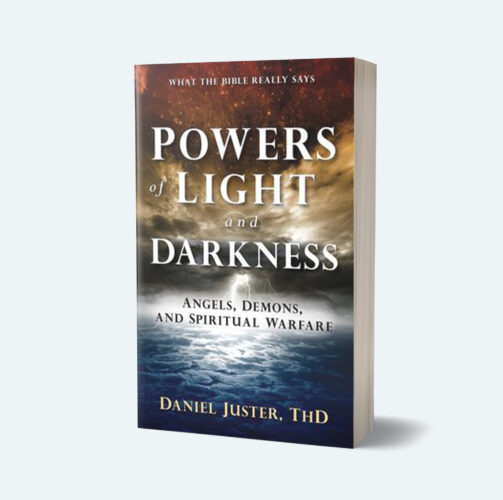
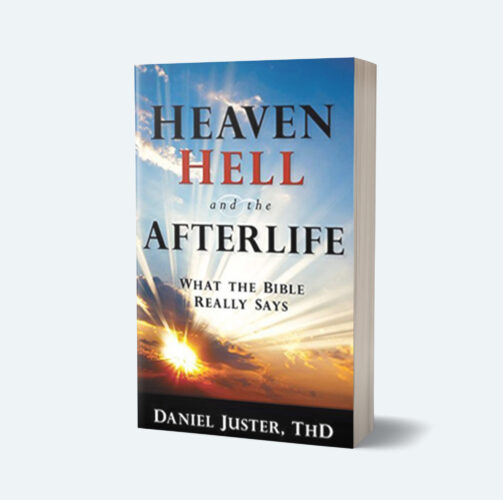
Yet in a true way, the Bible does teach prosperity.  However, the definition is not living in opulent wealth. Rather it is that “God will abundantly supply whatever you need for whatever you are called to do.”  That abundance is assured by giving our all to Him, tithing, and giving generously by faith. Yes, faith is a key to biblical prosperity. This faith comes by building the word into our souls.  There are many texts that present this promise.  Even the person who is in jail for the Gospel has God’s provision to enable faithfulness and survival as long as God wills since no one can take the life of one in the will of God unless it is time for that sacrifice.  Generally, God supplies food, shelter, and education for our children and often far more for his followers.  However, there is no right to live in opulent wealth in this life in the Gospel.  Some in the business world are called to wealth for the Gospel. They will manage that wealth for Him.  However, the standard for full-time ministers of the Gospel is modesty, which we define in the book.  It is not a poverty mentality.  The false prosperity teaching has hurt our witness for the Kingdom and made a mockery of us among the lost.  Let’s learn and build faith for true prosperity. Do obtain my book.  It also has advice for investing and retirement.  Steve also encouraged me to tackle two other areas of his concern.  I will report on these two as well in a future post. One is on teaching on spiritual warfare.  The other is on heaven, hell, and the afterlife. Will everyone be saved?


Social-Political Action and the Antichrist

Some Christians have criticized other Christians for being too political.  Can we clarify what too political means?  

As a student of Wheaton College in the 1960s anti-war years, the Evangelical faculty held up the examples of the great reformers of the 19th Century.  We were inspired by the examples of ministers of the Gospel who also engaged fully in the political and social issues of their day.  The great revivalist Charles Finney and his fight against slavery is an example.  So also, Jonathan Blanchard, the founder of Wheaton who stated as written on his memorial plaque in the old main tower, Blanchard Tower, that his purpose and motivation was to see, “The Law of God become the law of the Land.”  This orientation continued until the end of the century when the Evangelicals fought against child labor and got child labor protection laws passed, also anti-prostitution laws.  The driving motivation was those matters that were foundational in Biblical law, morality, and ethics. Then what happened?  A theology developed in England under a teacher who taught that working to improve this world was a diversion from our effort to get people into heaven. This theology was marginal until World War I.  Two things then happened.  First, many of the large denominations began to accept German critical theories of the Bible and undercut confidence in the Bible and the Word of God.  Evolutionary ideas were part of this.  Secondly, the war-shattered confidence that Christian efforts could improve society in any meaningful way.  It would be a very short term gain at best, so our efforts should be to get people into the lifeboat to go to heaven.  Of course, people had to make a living so there would be vocations for Christians, but this was a secondary matter.  The great philosopher Dr. Arthur Holmes of Wheaton used to say in our class, “We have lost a hundred years.”  The consensus of Wheaton was for prayer, revival, evangelism, and also passionate social involvement.  The idea of influencing the cultural formation centers of society was a common desire.  

How much is too much social/political action?  I think we understood that if evangelism and discipleship were not strong the other spheres of society could not be influenced for good over the long term.  Prayer and the power of God were necessary to all.  A strong Church was the center and church vocations were highly valued. Everyone has to know their calling and the proportion of their investments in time and energy in different spheres of society, but also to recognize the importance of the whole.  When I left Wheaton, I did come to realize that most of Evangelical Christianity did not share the passion of Wheaton for this comprehensive emphasis. 

However, beyond this, there is another point.  When do we seek to mobilize the whole Church for political and social action in an unusual thrust of emphasis? Beyond normal responsibility.   History tells us that this is when the issues are foundational issues of Law and morality in the culture and matters of life and death.  The issue of slavery is a primary life and death struggle.  Those Evangelicals who believed this responded with great mobilization. This includes William Wilburforce at the beginning of the 19th century in England and those named above in America.  Of course, there were those of a more quietistic bent who criticized the involvement.  We at Wheaton were all in on the social involvement orientation and did not want to give the culture to the devil.  

There are issues that are matters of scientific-social study that do not rise to the level of primary life and death struggle.  For example, economic policy is a matter of what will produce the greatest good for the greatest number in the population.  Believers try to study the issues and take the best position they can.  We should be chastened by noting that there were Christian Socialists and not just anti-Christians socialists who wanted the state to control all and to shut down charities and churches.  Socialism is in my view is a wrong economic theory, but it is not inherently atheistic.  Christian socialists looked at the harsh individualism of unbridled capitalism as anti-Christian!  They certainly wanted robust Christian freedoms and human rights.  Many political issues are judgments about programs and policies that are debatable on an empirical basis. 

In the 20th century, two movements produced Christian mobilization for social and political action.  Sadly, both largely failed in the short term, but the witness they gave was important.  The two were the Christian resistance to Communism and Nazism.  Both were perceived as from the spirit of the Antichrist and had to be resisted at all costs.  It was a minority who made such resistance in martyrdom.  These resisters stood for human rights, conscience, and liberty. One great example is the Barman declaration which was signed in 1934.  This was early in Hitler’s reign before serious killings began.  However, they saw the tyranny of Hitler’s making the state dominant over the Church. Would that the greatest number of the churches would have been mobilized behind these courageous leaders.  History would have changed greatly for the good. They were criticized for their stand, but today we look back on this group of German pastors and theologians and see them as a bright testimony.  They saw the spirit of the antichrist and sought a mobilization of resistance.   However, most missed it and stayed submitted to the tyranny.  And most denied that things were so drastically bad.  This is one reason why the church in Germany is powerless today and constitutes a small minority. 

The spirit of the antichrist was also behind and is behind Marxist atheistic communism.  In Russia, the push back required small cells and underground action.  Many Christians were soon killed in the blood bath.  Yet, how many even in the west thought communism would be progress. Today we think of these resisters as heroes. 

The spirit of the antichrist coming into political control or potentially coming into political control justifies unusual mobilization for social and political involvement.  We need to resist the gathering storm and now wait until the full destruction comes upon us. If we perceive potentially life and death issues form an antichrist spirit gaining control in our nation, then an emphasis on mobilization, on promoting our cause, on information is justified.  We cannot shrink back at the cost of job loss or marginalization. We must speak out and live boldly.  No, those who do such are not overly political.  Yes, they have to always lead with the caveat of the centrality of prayer, evangelism, and discipleship wherever possible.  However, the mobilization is a fight of life and death.  When the great Detrick Bonhoeffer joined in the plot to kill Hitler, he did not have sufficient prayer support to bind the powers of darkness that protected Hitler. He was executed.  Today we see him as a hero.  

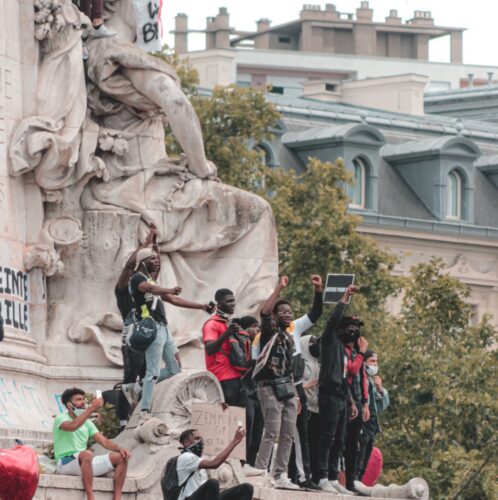
Christian survivors from Nazi and Communist oppression (some experienced both) warn us of the signs here.  Soft totalitarianism is here.  They argue that this is the time of resistance.  Christians often see it when it is too late.  They rationalize that it is not so bad.  Then great tragedy and death take place.  I would recommend Mike Brown’s great book Jezebel’s War on America.  He could have easily said Antichrist’s war on America.  There he gives an account of these life and death issues.  Cancel culture seeks to persecute Christians who preach God’s Law and traditional morality.  The issues of abortion to the 9th month, loss of religious freedom, cancel culture, and the loss of jobs for failure to salute to anti-Biblical agendas is a growing movement.  The LGBTQ agenda does not just foster basic freedom for their group but fosters shutting down those who have a different moral vision and accuse them (us) of hate speech.  Due to the cancel culture arising from this, people have lost jobs, low and high positions over the intimidation of these people.  It is life and death, not only in the matter of abortion, but the destruction of traditional norms in the society will lead to literal death.  The suicide rate of transgender people who do transition surgery commit suicide at a rate of more than 40% of the average.  See Mike Brown’s video, “In His Image,” on that.  The breakdown of sexual morality for relativistic sexual ideas leads to more criminality, violence, and death.  We can look at other issues that motivate.  Coddling Iran will lead to more death and indeed did so.  I believe that the anti-Israel orientation is of the antichrist spirit as is of course anti-Semitism.  More Christians will die in other lands from persecution without strong advocacy from the United States.  Then we have social media that has the ability to control buying and selling and communicating.  Pay Pal cancels accounts!  Banks refuse to lend. This is eerie and anticipates the mark of the beast as a requirement for buying and selling.   China has this down to a T.  My evaluation is that Christians did not become overly political.  Rather, they also bathed their involvement in prayer.  Were some carnal in their approach. Yes, maybe a large number but still a minority.  But I think the motive was an intuitive grasp, many unnamed, to rise up and push back against the antichrist.  One book I am loving that makes this so clear is by Rod Dreher, Live not by Lies.  The testimony of those who lived under antichrist oppression is key, and they are warning us that the country is drifting toward this.  Do I think our push back can succeed without revival?  No, but we must both seek revival and push back. Thank God for someone like Mike Brown who is so pushing and mobilizing others to resist.  So also Denis Prager, and Jorden Peterson.  Someone might ask about the radical right white supremacists.  Yes, this also is the spirit of the antichrist and must be resisted.  However, these folks do not control large corporations nor are they visible in legislatures and government leadership.  So, our battle has to be focused on where the problem is. With prayer, revival, and resistance, we can win.  If we don’t and we see more darkness and the tribulation is fully upon us, then our total victory is near. 

Is Belief in God Necessary to Maintain Morals and Ethics?

In a recent survey, only 46% of Americans said that belief in God was necessary to maintain morals and ethics.  In the Philippines, 98% said it was necessary.  In an interview, the famous Christian theologian at Yale, Miroslav Wolff, argued that affluence produces a sense of self-sufficiency and idolatry and is part of the reason for the survey results. Canada and Western Europe were much lower than in the United States.  Two generations ago, the results would have been very different.  

I have written before on the proposition that all historic cultures grounded their moral, social, and ethical laws in their religious world view.  A transcendent grounding was universally embraced as necessary.  Western culture and communist societies (China) are the first in history to think they can produce a lasting ethical order without this transcendence.  The great German philosopher at the end of the 18th century, Immanuel Kant, argued that maintaining a civilized order requires belief in God, freedom, and immortality (and afterlife).  God as the judge is crucial since if our behavior will not be ultimately judged, and there is no fear of God, then morals will decline.  We must see humans as free to be responsible or morals will not be possible.  Finally, life after death is a crucial belief that all might get their just reward or punishment.  That is good insight from someone who was not a Christian.  

Some who answer the survey are not indicating that belief in God is not important, but only that there are moral or ethical people who do not so believe. Some unbelievers maintain faithful marriages, act in ethical ways in business, and give to those in need.  Some believers do not. This is true. However, the larger issue is the drift of the culture over time.  The famous Christian philosopher, D. Elton Trueblood, in his book a generation ago, Philosophy of Religion, argued that a moral life is possible without the fear of God, but only for one or two generations.  He looked at the United States and saw that the country was going to be a cut-flower civilization.  Cut a flower from its roots, and it looks like nothing has changed.  However, it will wither.  Civilization will also wither. 

Today the atheist and agnostic argue that God is not necessary to maintain morals and ethics.  However, there is one slight of hand.  Since Trueblood’s time, and more than in his time, people are redefining what is moral and ethical.  Since he wrote his textbook, abortion has been accepted, living together in a sexual relationship before marriage is now seen as ethical, as is same-sex relationships and marriage.  Sexual relationships between consenting adults even without commitment is not considered unethical.  And amazingly the new standards are a new orthodoxy used to vilify and cancel those who disagree as haters.  In the 1960s Jack Wyrtzen, the known youth evangelist, argued that the new morality is really the old immorality.  If one defines immorality as moral, then the slight of hand is very disturbing.  A recent survey also found that we now approach 50% of children born out of wedlock.  We know what that will lead to in maladjustment and crime.  This is no longer a problem of the poor. 

The problem is intensified due to a weak and compromising Christianity.  Thankfully there are many who are not weak and compromising.  However, the compromisers have lost confidence in the Bible, Yeshua as the only way to salvation, and to Biblical morals as the only legitimate way to live   Yet, there is hope.  I have never seen so many gatherings for prayer for revival, in person, and on Zoom and worldwide.  Some prophets are hoping for a great third awakening.  I hope they are right. 

The Talmud Part One: The Mishneh

As a new leader in the Messianic Jewish world, 1972, I wanted to learn much more about Judaism. I began reading many books.  One project still amazes me, and that was going through the Soncino English version of the Talmud.  How deep was my understanding? I cannot evaluate it.  I will say that such an exercise does give a person much more of a sense of Talmudic Judaism than many would think possible without years and years of study with Rabbis.  Some years later, I studied other books on Rabbinic Judaism and especially Rabbi Jacob Neusner’s large volumes summarizing Rabbinic literature.  Neusner, in my view, was the greatest scholar of Rabbinic Judaism who was not an Orthodox Jew (he was conservative).   Then some months ago, I began to ask if I needed a review of the original source and decided to go through the Mishnah.  I wanted to refresh my memory.  The English version can be read and is just over 800 pages.  

The Mishnah is the first part of the Talmud.  It was passed down orally until written down by Rabbi Judah the Prince at the end of the second century.  It is amazing for us moderns to realize how much was memorized and passed down, and this includes the Talmud part two.  The second part of the Mishnah which covers more than 300 years after the Mishnah, is called the Gemara.  It explains and expands on the content of the Mishnah.  

The Mishnah is invaluable for describing both the Judaism of the first century Pharisees, but one has to be careful here and not read too much back into the first century.  It also gives the consensus of practice from the end of the second century.  It provides details on Israel’s Temple services, sacrifices, Feast celebrations and practices, Sabbath laws, and the basic practices of Synagogue prayer from that time.  It also gives us applications of Torah, the laws of Moses, and how Rabbis of the time sought to apply the Torah including tort law, penalties, and capital offenses. Sometimes the applications are very wise and sometimes I scratch my head.   

The largest amount of material in the Mishnah deals with laws of purity and holiness.  This was a major emphasis of the Pharisees and sometimes was a source of conflict with Yeshua.  The details of law upon law are stunning.  It is building a fence around the Law so the law will not be violated, but then it builds a fence around the fence.  So many of the decisions as to what counts as making one unclean and to what degree seem arbitrary and cry out for the greater explanations given in the Gemara.  The level of legal hair-splitting in the Mishnah astonishes anyone who looks at it objectively without an overarching ethnic prejudice.  Surely much in the Jewish heritage is good and beautiful and true, but in these legalistic pages upon pages, the question naturally arises.  Is this what God wanted for our people: to give their primary attention to pages upon hundreds of pages of legal arguments and conclusions over matters that do not seem consequential and go way beyond the text of the Torah.  The arguments often focus on what if questions?   The Biblical law on what makes one clean and unclean and hence qualified for Temple involvement can be readily understood for 98 or 99% of the cases.  The genius of the Rabbis is to focus on those 1% or 2% of questions of possible contamination with arguments of what does and does not contaminate. They want to cover every possibility of contamination even if remote.  Once a conclusion is given, then the new question of a new 1% or 2% that arises from that can continue a new argument.  

It is hard to not ask a question.  Is this really what God is concerned with and what he really wanted our people to spend untold hours studying and arguing about, day after day, year after year, and century after century.  Of course, outside of Orthodox Judaism, now a minority of Jews, Jews today take a much more flexible approach to these traditions and generally do not live by the strictures of the centuries past.  Certainly, this did produce a great separation of our people and was used by God to preserve our people.  But was this the necessary way of preservation?  I do not believe that this reflects the ideal will of God. Is such focus a result of the failure to recognize Yeshua and his approach to Torah in the first century and the failure to recognize the post-resurrection apostolic witness?  That is my conclusion.  When Ultra-Orthodox Jews in Israel or America say they are studying Torah, they mean the Talmud and the Rabbinic traditions that continue the debate to this day.  Rarely is Torah studied, though it is read through every year.  

That They May be One: A Primer in Church History and Restoration

I wrote this book that people might have a very brief introduction to Church history.  Why? Because it is important for all followers of Yeshua to know of their roots, not only in Israel, but in the history of the Christian Church.  However, I also wrote it because I think there is a great pattern of the working of the Spirit where one can see both God’s preservation of truth as well as the losses and restorations of truth and emphases.  I believe we are in an ultimate period of restoration that that began with the Reformation.  That restoration is two steps forward and one step back. It would be a great mistake to think that due to the terrible shortcomings and sin in the institutions of the Church that we are to write off the historic churches and think that what is important is only with us today.  It is foolish to think we do not learn from the best of the history of the churches.  It is as Peter Hocken wrote, The Glory and the Shame. The book is also written with the hope that in the final times before Yeshua returns, He will bring us to the unity for which he prayed in John 17:21, that we may be one “that the world might believe.”   The book answers many questions. 

What great truths were preserved and written down in the early Church, its declarations and creeds?  How did they come to believe in the role of bishops?

  1. Where did the early Church go astray?
  2. What were the great developments during the history of the domination of the Church by Catholic and Eastern Orthodox Christianity.  
  3. What was restored in the Reformation?  Where did they get it right and where did they miss it?  Who discovered the continued election of Israel? How the Puritans fit in. 
  4. What was restored through John Wesley and Methodism?   How did this prepare the way for Pentecostalism and its restoration?
  5. How did the 19th century British Church come to believe in the restoration of Israel and to prepare for it?
  6. What was restored in the Latter Rain Movement?  Where was it off?  What was restored in the Charismatic movement and in Five Fold Restoration Movements?  Where has it been good and where not so much?

And finally, where is all this going as we see all coming together, all the truths from the historic churches, the Reformation, to recent restorations unto the unity and blessing of the last days harvest and the return of Yeshua. 

This book is an easy read.  It will help you!